

Goa tourist places worth your days, grouped by area
In short: The Goa tourist places worth most travellers’ days are Fort Aguada, the Old Goa churches, Panaji’s old quarter, a beach or two, and in the south Palolem. Pick an area first, then choose from it.
You open a “top 25 places in Goa” list and every name looks good. Then you try to fit them into four days and find half are an hour or more apart, in opposite directions. That’s the list’s fault, not yours. A list of names is not a plan.
If you want the hotel, transfers and sightseeing sorted in one place, VeeTrips lists a Delhi-departure Goa package with the inclusions spelled out. Choose the places first, though. That’s what the rest of this page is for.
I’ve sorted everything by where it sits, because that decides how much of your trip is spent in a taxi. Three pockets: North Goa, Panaji with Old Goa, and the South. Within each I’ll say what’s worth the trip, what’s only fine, and what I couldn’t confirm.
Goa tourist places by area, and what each pocket is for
| Area | Main places | Good for | The catch |
|---|---|---|---|
| North Goa | Fort Aguada, Baga, Anjuna, Chapora Fort | Beaches, forts, markets, nightlife | Crowded on the busy stretches |
| Panaji and Old Goa | Old Goa churches, Latin Quarter, Mandovi cruise | Heritage, walking, evenings | Not a beach day |
| South Goa | Palolem, Agonda, Dudhsagar Falls | Quiet, space, nature | Longer rides between places |
Source: Wikivoyage on Goa, Wikivoyage on Panaji
Wikivoyage’s summary is that the north is known for nightlife, markets and an energetic atmosphere, and that the south offers a “more tranquil and peaceful atmosphere”. I’d agree with both, and I’d add that neither is better. They’re two different holidays. Our North vs South Goa guide goes deeper on that choice.

North Goa: the forts, the beaches and the busy bits
This is where most first-time visitors end up, so it’s where the crowds are. It’s also the easiest area to do a lot in, because the places sit close together.
Fort Aguada
If I could keep only one fort, it’s this one. It was built in 1612 by the Portuguese, on Sinquerim Beach, overlooking the Arabian Sea. A freshwater spring inside supplied passing ships, and that’s where the name comes from: “Aguada” means “watery” in Portuguese.
The lighthouse on the hill beside it dates from 1864, and it’s called one of the oldest in Asia. The old Aguada jail, part of the fort, was opened as a Freedom Struggle Museum on 19 December 2021. I couldn’t find entry fees or opening hours on any page I read, so ask your hotel or driver on the day. Don’t take a number from me.

Baga, Calangute and the beach stretch
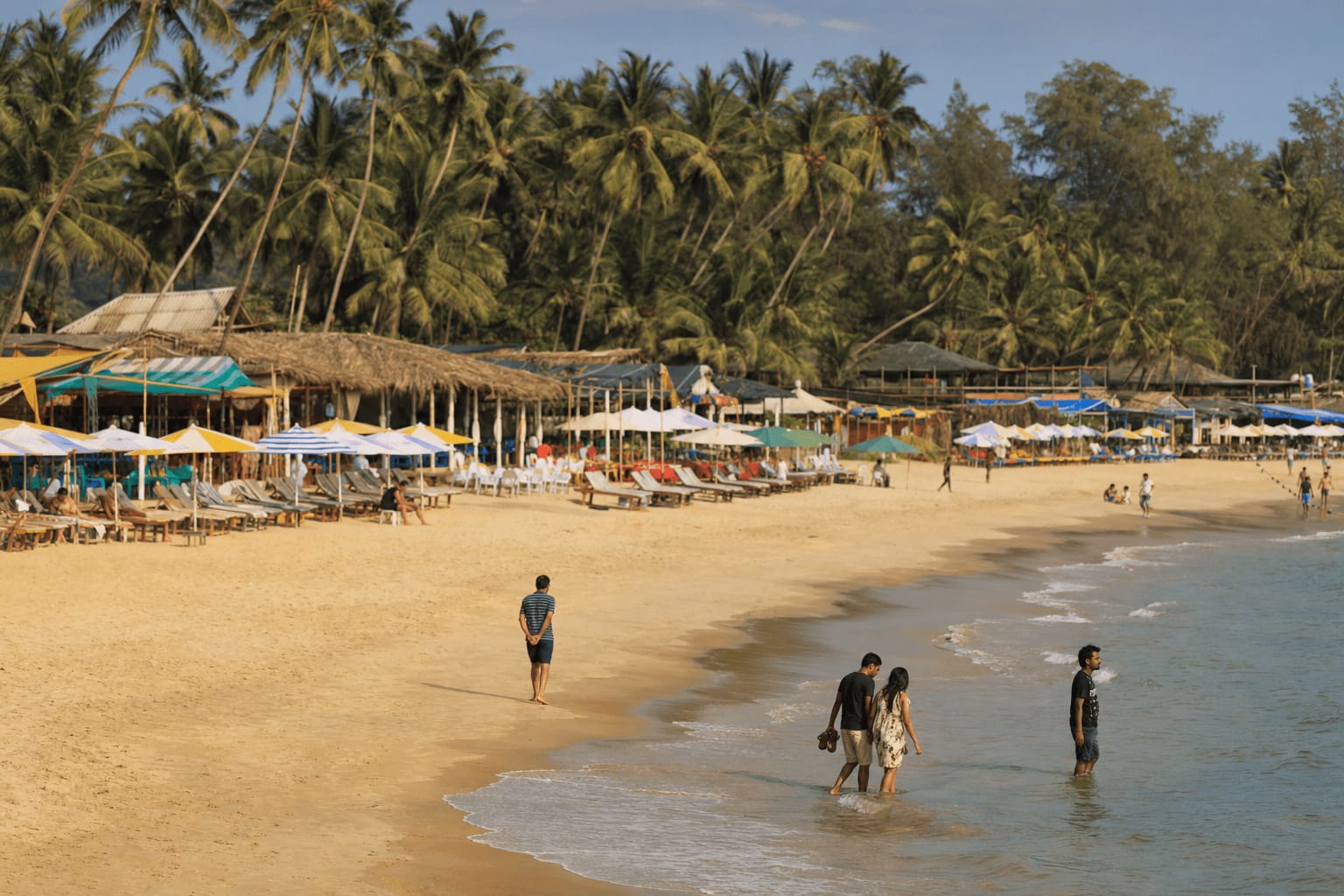
Calangute is the beach Wikivoyage calls the “queen” of Goa’s beaches, and then admits it’s now crowded. Baga sits just outside it and is described as a family beach. If you want sun beds, snacks, noise and plenty to do, this is it. If you were hoping for an empty shoreline, you won’t get one here.
One small money point from Wikivoyage: beach beds cost about ₹100 an hour, and the bed is free if you order food from the shack. Prices move, so treat that as a rough idea.
Anjuna and Chapora Fort
Anjuna holds a flea market every Wednesday, which is worth planning a day around if you like bargaining. Chapora Fort is nearby. It’s built on a hilltop, so expect a climb, and in return you get views over the sea and the beaches around it. Go early or late. Midday on a hill with no shade is a poor idea in any season.
Together, Anjuna and Chapora make a good half-day. Fort Aguada plus Baga and Calangute makes another. That’s two days of North Goa without much driving.

What to skip here
If you don’t like crowds, skip the busiest part of Calangute and Baga and give the time to Anjuna, Chapora or the south. I’d say that plainly rather than pretend every beach is for everyone.
Panaji and Old Goa: the part most people squeeze in last
Don’t. This is the bit of the trip that tells you Goa has a past as well as a coastline, and it doesn’t need a whole day if you plan it well.
The Old Goa churches
Old Goa has 16th-century churches, convents and monuments, and Panjim sits about 9 kilometres west of it. The names there include the Se Cathedral, the Basilica of Bom Jesus, the Church and Convent of St. Francis of Assisi and the Chapel of Our Lady of the Mount.
The Basilica of Bom Jesus is the one most people come for. Construction began in 1594 and it was completed in 1605, and it contains the body of St Francis Xavier. His feast is celebrated every year on 3 December. If you’re there around then, expect crowds and a different atmosphere. That’s my inference, not a figure from a source.
A practical note. Old Goa’s churches are active places of worship. Dress modestly, keep your voice down and check for service times before you plan photographs. I couldn’t find fixed opening hours on the pages I read, so confirm locally.
Panaji itself
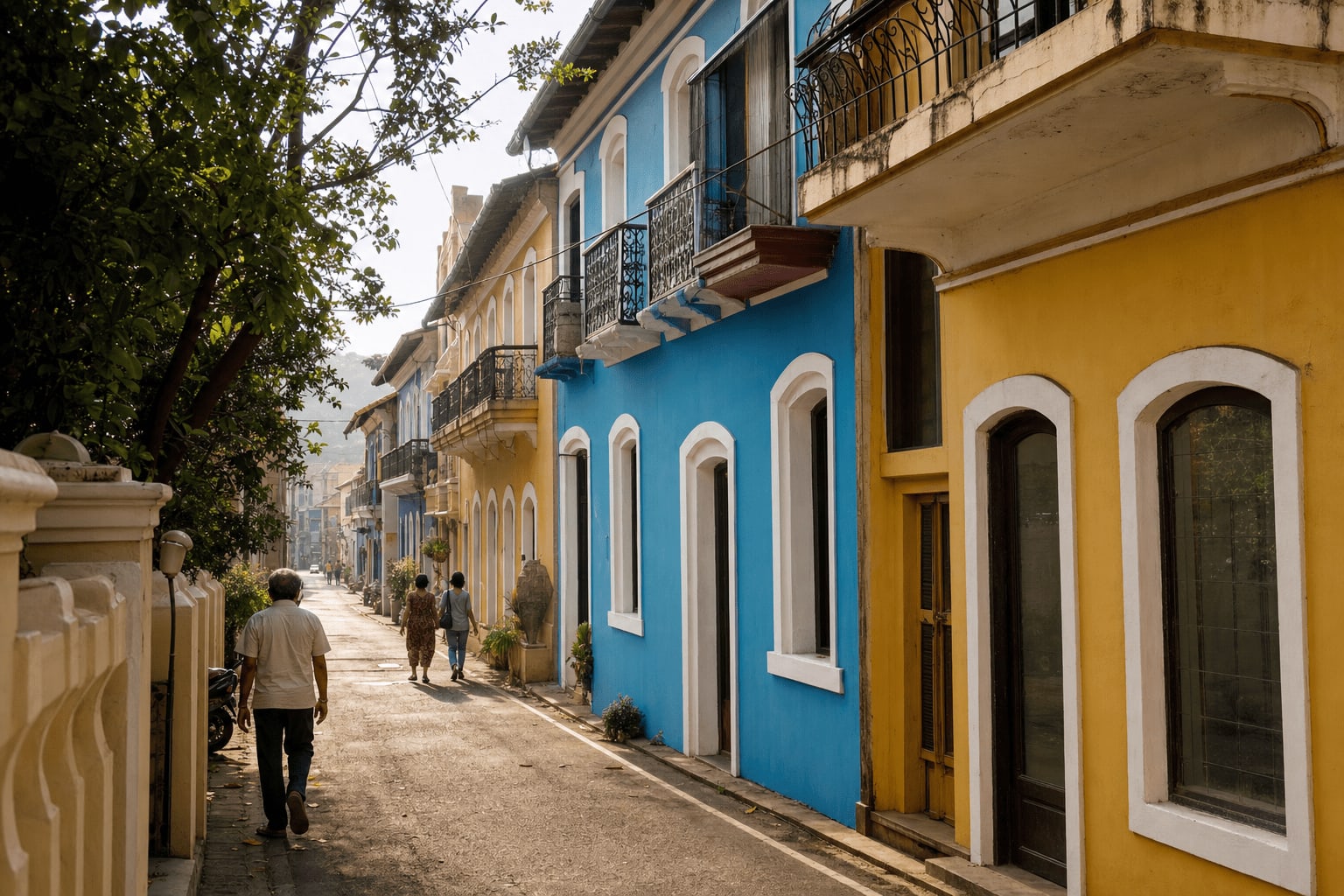
Panaji is small and walkable. The Latin Quarter, called Fontainhas, sits at the eastern end of town, so give yourself time to walk it. The Goa State Museum has Hindu and Jain sculptures, including bronzes, and a printing press the Portuguese brought to Goa in 1556.
Evenings are for the river. Mandovi cruises start from around sunset, leaving from beside the Captain of Ports jetty. I couldn’t find a fare for the ordinary cruise, so ask before you board.
One timing trap: Wikivoyage says Panaji closes around 8PM, and that shops often take a siesta from about 13:00 to 15:30. If you plan to shop in the afternoon, check first. Morning and early evening work better.

How long it takes
Panaji and Old Goa together fit into one day without rushing. Do the churches in the morning, when it’s cooler, and spend the afternoon in town. Then take the cruise as the light goes. It’s a gentle day, and for parents or older relatives it’s often the one they remember best.
South Goa: quiet beaches and one big waterfall
The south is where you go when the north feels like too much. Things are further apart, so you’ll want to choose one base and stay near it.
Palolem and Agonda
Palolem is the southernmost beach and, per Wikivoyage, “scenic and quiet with nearby islands”. Agonda, nearby, is also known as Turtle Beach. They’re the Goa tourist places I’d send someone to who says “I just want to sit and look at the sea.”
The catch is that beach huts are shut during the monsoon, Wikivoyage says, so the south is a post-rain destination more than a rainy-season one. I won’t promise you dry weather in any month. Nobody can.

Dudhsagar Falls
Dudhsagar is about 60 km by road from Panaji, inside the Bhagwan Mahaveer Sanctuary. Heights are given inconsistently, so I’m not going to quote one.
What I will tell you is the rule. Indian Railways has banned passengers from boarding or getting off at the Dudhsagar stop, and the Goa Forest Department doesn’t allow the trek along the railway track. Violators can be fined heavily. So don’t plan around walking the line because someone’s blog said you could. Ask whoever is arranging your trip how they get you to the falls legally, and whether it’s possible on your dates.

Wildlife and bird sanctuaries
Wikivoyage also lists several sanctuaries, among them Bondla, Cotigao and the Dr. Salim Ali Bird Sanctuary near Panaji. The bird sanctuary needs permission from the Chief Wildlife Warden. It’s easy to promise yourself a morning there and then find the paperwork was the real plan. Sort the permission out first, or leave it off the list.
Which Goa tourist places for who
Here’s how I’d choose.
What kind of trip you want, and where to start
| You are | Start with | Then add |
|---|---|---|
| Friends on a short break | Baga, Calangute, Anjuna | Chapora Fort, Fort Aguada |
| Travelling with parents | Old Goa and Panaji | One quiet beach, early in the day |
| Couple wanting quiet | Palolem, Agonda | A day in Panaji |
| First time, wants a bit of everything | Fort Aguada, Old Goa | One beach in the north, one in the south |
Quiet or busy decides more of this than anything else. A parent who wants to sit in the shade will not thank you for a hilltop fort at noon. A group of friends will find Palolem dull by the second evening. Neither is wrong, but you do need to ask each person.

A rough way to group your days
Don’t use this as a fixed schedule. Use it to see how the places fit together.
Three days in the north. One day for Fort Aguada, Baga and Calangute. One for Anjuna and Chapora Fort, ideally a Wednesday for the flea market. One for Panaji and Old Goa, which sit on the same side of the state as the northern beaches.
Four days, two areas. Add a day in the south, with Palolem or Agonda. Better still, move hotels after day two so you’re not spending the day on the road. A hotel in the south and a day trip to the north means a lot of driving.
More than four. Add a slow day, or Dudhsagar if you can find a legal and reliable way to do it. Those are the two things I’d add first.
Remember the first day isn’t a sightseeing day. Our Goa package checklist covers the two airports and why a South Goa hotel booked on a flight into the northern airport makes for a long first evening. Check which airport your flight uses before you pick an area.
Before you book
- Pick your area first, then your places.
- Ask what’s in the price: transfers for sightseeing days, entry fees and meals, as well as flights from Delhi.
- Ask which places are open on your dates, and whether any need a permit.
- Keep one slow day in the plan. You’ll want it.
We’re a single-owner agency in Dwarka, so if you’d rather talk the places through with a person, you can call the office and ask. I’d still do the sorting by area above first. It’s the thing that makes any quote easier to judge.
Frequently asked questions
What are the must-see tourist places in Goa?
For a first trip, I’d pick Fort Aguada, the Basilica of Bom Jesus and the other Old Goa churches, Panaji’s Latin Quarter, one busy beach such as Baga and one quiet one such as Palolem. That’s a good mix of heritage and sea without too much driving.
Which part of Goa is best for tourists, North or South?
North Goa suits you if you want markets, beaches, nightlife and lots of choice. South Goa suits you if you want quiet. Wikivoyage describes the north as energetic and the south as tranquil. Pick by who is travelling.
How many days do I need to see Goa’s main places?
Three days covers the north plus Panaji and Old Goa. Add a fourth day if you want a south beach too. Move hotels between areas rather than commuting.
Can I visit Dudhsagar Falls on my own?
Be careful. Indian Railways has banned boarding or alighting at the stop, and the Forest Department doesn’t allow the trek along the railway track. Ask a local operator how to reach it legally on your dates.
Is Old Goa worth visiting?
Yes, if you like history and architecture. It has 16th-century churches, including the Basilica of Bom Jesus, where construction began in 1594. It’s a quieter day than a beach day, which many families like.
Do I need a permit anywhere?
For the Dr. Salim Ali Bird Sanctuary, Wikivoyage says permission from the Chief Wildlife Warden is needed. Rules change, so check close to your dates.