Maldives places to visit: pick the style, then the island
In short: The Maldives places to visit fall into five groups: Malé, local islands like Maafushi, resort islands, reef spots like Hanifaru Bay, and the far south. In 4 to 5 days, pick two groups, not five.
You open a “top 20 Maldives islands” list and every name is an island you’ve never heard of. None of them says how far it is from the airport, or whether you reach it by ferry, speedboat, seaplane or plane. That’s the list’s fault, not yours. Most of those islands are not neighbours, and a short trip can’t hold them all.
If you want the hotel, transfers and sightseeing sorted in one place, VeeTrips lists a Delhi-departure Maldives package with the inclusions spelled out. Decide what sort of trip you want first, though. That’s what the rest of this page is for.
I’ve sorted everything by trip style, because that decides how you travel and what the days cost. The Maldives has 1,192 coral islands in 26 atolls, and only parts of 10 of the 21 administrative atoll groups are open to tourism. So the real question is not “which of 1,192” but “which pocket”.
A word on money before we start. I couldn’t find a dated source for rupee prices of resorts, local-island stays or speedboats, so I won’t invent any. Where a source gives a price, I quote it in the currency it uses. Ask whoever quotes you to put every line in rupees, in writing.
The five groups, and what each is for
| Group | Main places | Good for | The catch |
|---|---|---|---|
| Malé and Hulhumalé | Friday Mosque, museum, markets, artificial beach | A half day of culture and street life | Crowded capital, not a beach holiday |
| Local islands | Maafushi | Lower costs, real island life | No alcohol; swimwear limited to a bikini beach |
| Resort islands | Most of Kaafu Atoll | Privacy, the classic Maldives picture | Transfers by speedboat or seaplane cost real money |
| Reef spots | Hanifaru Bay, Baa Atoll | Mantas, snorkelling, diving | Seasonal, permits needed at Hanifaru |
| Far south | Addu Atoll, Fuvahmulah | Something few visitors see | Far from Malé, and flights take planning |

Malé and Hulhumalé: the half day everyone passes through
Nearly every trip lands here, so you may as well use it. Visitors almost all arrive at Velana International Airport, on Hulhulé Island next to Malé. Malé is the capital and by far the largest city, crammed onto a small island.
Crammed is the right word. It’s a city you walk in a morning, which is why I’d keep it to half a day. Here’s what’s worth the walk.
The Friday Mosque, Hukuru Miskiy, was built in 1656 during the reign of Sultan Ibrahim Iskandar I. The National Museum sits in the last surviving building of the Sultan’s palace, in Sultan Park. Opening hours are listed as Saturday to Thursday, 09:00 to 17:00, and the park is free while the museum costs US$3. The fish market and the local market are on the waterfront, and Majeedhee Magu, the shopping street, stays open from 09:00 until 23:00 apart from a break from 18:00 to 20:00 and about 15 minutes after each prayer time.
The Tsunami Monument and the artificial beach come up on most lists too. The artificial beach is about a ten-minute stroll from the airport ferry. I couldn’t confirm opening details for the monument, so ask your hotel. Most locals bathe fully clothed here, so don’t plan on a bikini day.


Getting around Malé and out to Hulhumalé
The airport ferry to Malé costs MVR15 and takes 10 minutes, and it runs every 15 minutes from 06:00 to 20:30, then every 30 minutes until midnight. Hulhumalé is an artificial island with a beach, restaurants and cafés. The ferry from Malé takes 20 minutes, costs MVR10 and runs roughly hourly. Some details may be out of date, so confirm times when you land.
Hulhumalé is where I’d stay if you land late or your seaplane gets cancelled. Evening seaplane flights carry “a high risk of being cancelled”, and Hulhumalé is the place people end up for the night.

Local islands: the lower-cost way to see the Maldives
Yes, you can visit the Maldives without a resort. People live on these islands, and some have guesthouses. It’s the version of the trip that costs less and feels less like a brochure.
Guesthouse prices sit at the low end at €25 to €35 a night, and village homestays go as low as €15. Those are published figures, not a quote, and I can’t turn them into rupees for you without a dated rate. Use them as a sense of scale: far below a resort, though not free.
Maafushi
Maafushi, in Kaafu Atoll, is the one I’d start with, because the logistics are easy. The speedboat from Malé takes about 30 minutes and costs about $25. The public ferry is cheaper, about 22 MVR, but slower, at around 1 hour 45 minutes, and the listed departure is at 15:00 every day except Friday. So if you land in the morning, you can be on the island by lunch. Check the ferry time before you count on it.
There’s a small bikini beach in the north of the island, and diving, snorkelling and water sports are offered. There’s no alcohol on the island. You can drink on a boat near the beach. It’s a popular choice for hassle-free accommodation, which is a fair description.

Other local islands on the lists
Thulusdhoo, Dhigurah, Ukulhas and Fulhadhoo keep turning up for the same reason: they’re inhabited, they have guesthouses, and they’re cheaper than a resort. I didn’t find a source for their transfer times or costs, so I won’t give any. Ask before you book. A good question is “how do I get there on my arrival day, and what if the boat doesn’t run?”
The rules that surprise people
Alcohol is banned on inhabited islands. Only resorts, liveaboards and the Hulhulé Island Hotel are licensed to serve it. Customs confiscates alcohol at the airport. Dress modestly in the village, covering your shoulders, and avoid short or tight shorts. Bikinis are allowed only in a designated area on some local islands. Topless sunbathing isn’t allowed anywhere, resorts included.
That isn’t a reason to avoid local islands. It’s a reason to pick one if you want a quieter, more modest trip, and to pick a resort if the plan includes cocktails.

Resort islands: for couples and families who want privacy
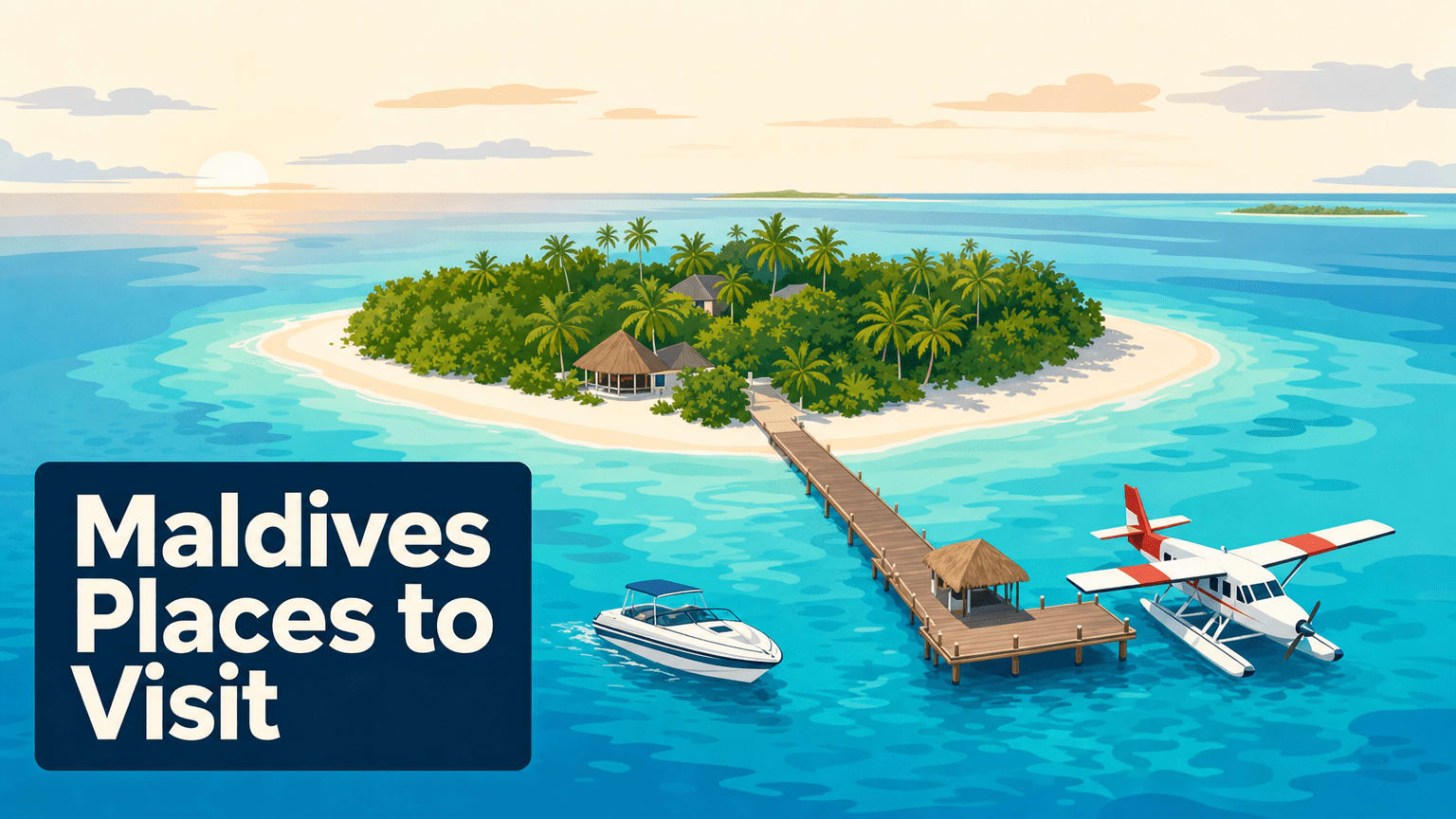
Most resorts take up their own island, and most of them are in Kaafu Atoll, the one with the capital and airport. This is the Maldives of the postcards. I’m not going to name individual resorts here, because I’d be guessing which suits you. Ask for two or three and compare what’s included.

What matters more is how you get there. The options are a domestic flight, a boat or a seaplane. Resort taxi boats serve the North and South Malé atolls. A private transfer “could cost US$500-800”.
That’s a big number, so find out whether the transfer is in your package or on top of it. It’s the single line I’d check first on any resort quote.
On meals, US$1000 per week per couple is “a conservative budget” at a mid-range resort for meals, drinks and excursions, and that’s on top of flights and the room. It’s the cost nobody puts on the headline. So ask whether your package is half board, full board or all-inclusive, and what’s charged separately.
Resorts are also where you can drink, since they’re licensed for it. For a family, I’d pick a resort when the children are small, because everything sits on one island and the transfer is the only real journey.
What a resort gives you, and what it doesn’t
You get an island run for visitors, and no need to plan the days. You don’t get Malé, the museum, or a village. If you want those, add a night in Hulhumalé or a day trip, and ask your resort what it offers.
Local island or resort: how I’d decide
Here’s my honest take. If this is your first Maldives trip and you want the picture you saw on your phone, a resort is the safer bet. Everything is on one island, someone else plans the days, and the journey is the transfer. If you’re travelling with parents who like a slow pace, that’s a point in its favour.
If you’d rather see the place, a local island is better value for the sights. You’ll meet people, eat in small cafés and walk the whole island in a morning. You’ll also give up a drink at sunset and the freedom to wear what you like on the beach.
Neither is wrong. Ask each person in your group two questions: do you want a drink, and do you want to see how people live? The answers usually settle it before any price does.

Reef spots: Hanifaru Bay and the marine highlights
If the sea is the reason you’re going, the reef matters more than the resort. The best scuba diving is from January to April. For snorkellers and manta fans, the answer is different, and that’s worth knowing before you pick dates.
Hanifaru Bay, in Baa Atoll, “regularly sees some of the largest gatherings of manta rays worldwide”, with up to 100 manta rays when the tide pushes plankton into the bay. Baa Atoll was named a UNESCO World Biosphere Reserve in June 2011. A manta guide puts the peak season at June to November, and the absolute peak at late July to October.
So Hanifaru’s best months fall in the rainy season, not in the diving window. The southwest monsoon reaches the Maldives in early June and lasts until the end of November. If your dates are fixed to the dry months, don’t expect mantas to follow your calendar. Nobody can promise a sighting.
The rules also protect it. The same guide says diving is prohibited, so it’s snorkel only. Permits are required and access is through licensed operators or resorts compliant with the reserve. Only 20 visitors are allowed in the bay at a time, with sessions capped at 45 minutes. In practice you book it through a resort or a liveaboard, not on arrival.
Banana Reef, Manta Point and the whale sharks of South Ari are on most lists. I couldn’t confirm months or details for them from a source I could read, so I’m leaving them as names to ask about. If you dive, decompression chambers sit at resort islands in Kaafu, Lhaviyani and Alifu atolls, which is worth asking about when you choose a base.

The glowing beach at Vaadhoo
Vaadhoo is the one place on this list that people travel for a photograph. The island is “famous for its glowing beaches, commonly termed the Sea of Stars”, and the glow is attributed to phytoplankton or dinoflagellates. It sits at the southern tip of Raa Atoll, about 194.46 km north of Malé, and the island’s census population was 452 in 2022.

When can you see it? Honestly, not on a schedule. Travel sites give different months: some say April to November, others say the monsoon months, others pick June and October. No reference source gives months at all. The glow depends on conditions, and darkness helps, so a night away from artificial light is your best bet.
I’d treat it as a bonus, not the reason to book. If you’re staying in Raa Atoll, ask your guesthouse or resort whether the glow has been seen in the last few days. If you’re based in Malé, it’s a long way for something that might not show.
The far south: Addu Atoll and Fuvahmulah
These are for the traveller who has done a resort and wants something else, and they rarely fit a first 4 to 5 day trip. That’s my view, not a rule.
Addu is the southernmost atoll, 540 km south of Malé. Gan airport can be reached from Malé on a 60-minute flight. Gan, Feydhoo, Maradhoo and Hithadhoo are joined by causeways, so unlike most of the Maldives you can move between islands on land. A bus runs roughly every two hours, daily except Friday mornings, and it’s “reliable but slow”.

Gan was RAF Gan until the base closed in 1976. Koattey, a nature reserve on Hithadhoo, has bird-watching platforms. It’s a place of history and quiet, not a resort holiday.
Fuvahmulah lies about 494 km south of Malé and is known for a high concentration of tiger sharks. There are two scheduled flights a day from Malé, but that may be out of date. Check the schedule for your dates. I’d call this a trip for divers who know what they want. Tiger sharks are not a casual snorkelling plan, and I won’t pretend otherwise.

How you get between places
This is the question most lists skip, so here it is in one table.
How to reach each place, with the figures sources give
| Journey | How | Time and cost |
|---|---|---|
| Airport to Malé | Public ferry | 10 minutes, MVR15 |
| Malé to Hulhumalé | Ferry | 20 minutes, MVR10 |
| Malé to Maafushi | Speedboat | About 30 minutes, about $25 |
| Malé to Maafushi | Public ferry | About 1 hour 45, about 22 MVR |
| Malé to Addu (Gan) | Domestic flight | 60 minutes |
| Malé to a resort | Boat or seaplane | Private transfer could cost US$500-800 |
Three more things. Three airlines run scheduled flights between islands. Public dhoni ferries and cargo boats, run mainly by MTCC, serve the other atolls, and a cargo boat to a remote atoll typically costs €14 to €38. And inter-atoll permits are no longer needed, so you can travel where you wish.
The practical rule: the farther the island, the more the journey is the day. Ask how long the transfer to your island takes, door to door. Don’t put a far atoll and a close one in the same two days.
Sample routes for 4 to 5 days
These are not fixed schedules. They show how places fit together, and they’re built only from the transfers above.
Route 1: a local island and the capital (4 nights). Land, take the airport ferry to Malé, and spend the first half day on the mosque, museum and markets. The next morning, take the speedboat to Maafushi, about 30 minutes. Stay three nights there. Snorkel, take the bikini beach, and go on one boat trip. Return to Malé the day you fly.
Route 2: one resort, no rushing (4 nights). Choose a resort in Kaafu Atoll, where most resorts are, and confirm the transfer is in the price. Spend the days on the beach and the house reef. Keep one night spare in Hulhumalé at either end if your flight lands late, so a cancelled seaplane doesn’t wreck day one.
Route 3: a mix (5 nights). Two nights on a local island, then three in a resort. You see an inhabited island, swim in a lagoon, and end with the quiet. It costs more than Route 1 and less than a full resort week, though I won’t put a number on that.
If you add a reef day. Hanifaru needs Baa Atoll and a permit through a resort or operator, so treat it as the centre of a trip, not an add-on. Don’t try to squeeze Addu or Fuvahmulah into any of these. Each one is its own journey.
Which route suits whom
| You are | Start with | Add |
|---|---|---|
| Budget-minded couple | Route 1 | A snorkel day |
| Family with small children | Route 2 | One day in Malé |
| First-timer who wants both | Route 3 | Nothing more |
| Diver or snorkeller in the rainy months | Resort in Baa Atoll | A Hanifaru session, if offered |
When to go
It’s a tropical monsoon climate, with a dry season tied to the winter northeast monsoon and a rainy season tied to the southwest one. The southwest monsoon arrives in early June and lasts until the end of November. Annual rainfall averages 254 centimetres in the north and 381 centimetres in the south.
I won’t promise sunshine in any month. The best scuba diving is from January to April, and rainfall rises from June to November. For surfing it’s March to October, with the biggest waves in June, July and August. So the “best” month depends on what you’re there for. A diver and a mantas-and-snorkel person want different calendars.
Before you book
- Pick the style first: a local island, a resort, or a mix. Then pick the place.
- Ask what’s in the price. Flights from Delhi, the transfer, meals and the visa line are all separate questions.
- Ask how you reach the island on your arrival day, and what happens if the seaplane or boat is cancelled.
- Check entry rules close to your dates. The Maldives Immigration tourist visa page, marked updated 10/09/2026, lists a passport with at least 1 month’s validity, confirmed return tickets, a prepaid booking at a registered facility, enough funds, and an individual Traveller Declaration up to 96 hours before arrival. I can’t tell you the rules won’t change. Read the page again before you fly, and ask us about visa assistance if you want a hand.
We’re a single-owner agency in Dwarka, so if your dates move you can call the office and speak to one person. I’d still pick your style above first.
Frequently asked questions
Which are the best Maldives places to visit on a budget?
Local islands, and Maafushi is the easiest start. Guesthouses run at €25 to €35 a night at the low end, and the speedboat from Malé takes about 30 minutes. Remember there’s no alcohol on inhabited islands.
Can you visit the Maldives without staying at a resort?
Yes. Local islands like Maafushi have guesthouses, a small bikini beach and day trips. You follow local dress rules and can’t drink on the island. Resorts are the only licensed places, along with liveaboards.
How many days are enough to see the Maldives?
For a first trip, 4 to 5 days is enough for one style: a local island plus Malé, or one resort. Far places like Addu and Fuvahmulah need their own trip.
When can you see the glowing beach on Vaadhoo Island?
There’s no fixed date. Travel sites give different months, and no reference source gives any. It depends on conditions and darkness, so ask a local guesthouse or resort whether it has been seen recently.
How do you travel between islands in the Maldives?
By ferry, speedboat, seaplane or domestic flight. Public ferries cost a few US dollars within an atoll, and private transfers could cost US$500-800.
Is Hanifaru Bay open to everyone?
Not freely. Scuba diving is prohibited, entry needs a permit through a licensed operator or resort, and only 20 visitors are allowed in at a time, says one manta guide. Book through your resort.