What the culture of Goa is known for
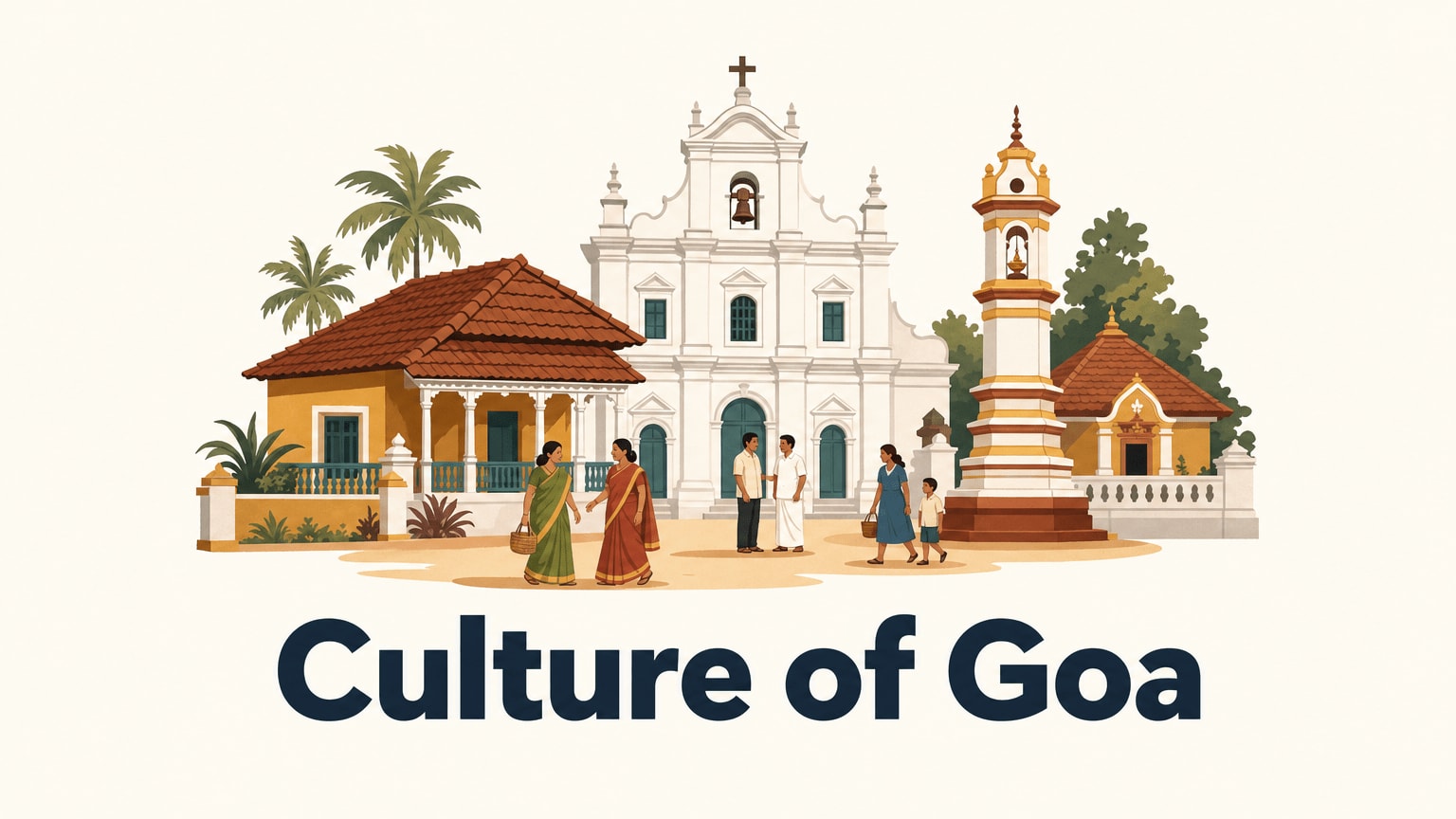
In short: The culture of Goa is a Konkani, Hindu and Catholic mix shaped by about 450 years of Portuguese rule. You see it in churches and temples, fish curry rice, mando songs and festivals like Carnival and Shigmo.
Most people meet Goa on a beach and leave thinking it is all shacks and sunsets. Then a friend asks “did you go to Old Goa?” and you realise you saw the coast and missed the place. That isn’t your fault. Beach pages don’t tell you much about the people who live behind the beach.
If you want the hotel, transfers and sightseeing sorted in one place, VeeTrips lists a Delhi-departure Goa package with the inclusions spelled out. Pick your festival month first, though. The rest of this page helps with that.
I’ll go in the order a visitor actually meets things: where the mix came from, who lives there, what they pray to, when they celebrate, what they eat, and how to turn up without being the loud one.
How the Portuguese layer got there
The Portuguese invaded Goa in 1510, led by Afonso de Albuquerque. Their rule lasted about 450 years. India took control in 1961 after a 36-hour battle, and Goa became a state in 1987, following the Konkani language agitation.
Before 1510 most people in Goa were Konkani-speaking Hindus. So the Portuguese didn’t arrive in an empty place. They arrived in a Hindu one, and what you see today is the long argument and the long mixing that followed.
That is why Goa feels different from Delhi, or from Jaipur. There are churches with Manueline doorways and temples with Kadamba and Maratha influence. Hindus and Christians share a language while praying in very different buildings.
It wasn’t all gentle. The Goa Inquisition was set up in 1560 and finally abolished in 1812 (some accounts say 1820). I mention it because the harmonious Goa on posters has a harder history under it.

People and Konkani
Here is the split. In the 2011 census, Goa had a population of 1,458,545: 66.1% Hindu, 25.1% Christian, 8.3% Muslim and 0.1% Sikh. Christianity has declined in Goa because of emigration.

Konkani is what holds all of that together. Most Goans speak it as a first language, and practically all can speak and understand it. It is central to Goan identity, and the 1987 statehood followed an agitation about it. On 4 February 1987 the Goa Legislative Assembly passed the Official Language Bill, making Konkani the official language.
One detail surprised me. Devanagari is the official script, but the Konkani language page says it’s used very little in Goa compared with Romi Konkani, the Roman-script version Konkani Christians have long used. So Konkani is written in two scripts, and both are in everyday use.
A 1975 Sahitya Akademi committee found the language “heavily influenced by the Portuguese language”. That’s the Portuguese layer sitting inside the language itself.
People also ask about the Kunbi and Gawda communities. I couldn’t find a source I trust on them, so I won’t describe them from memory. If you meet someone from one, ask them about it. That’s the better source anyway.
Churches, temples and the habit of sharing
Goa’s government describes the state’s religious harmony as something visible in shared symbols and festivals. I’m cautious with the word “harmony”, because it can hide differences. But there are real examples you can see.
Take khatkhate, a vegetable stew with at least five vegetables in it. The Goa government’s page says it’s popular at festivals, Hindu and Christian alike. The same page says Shigmo, the Hindu spring festival, and Holi together “signify unity in diversity”. And the language is the biggest shared thing of all.
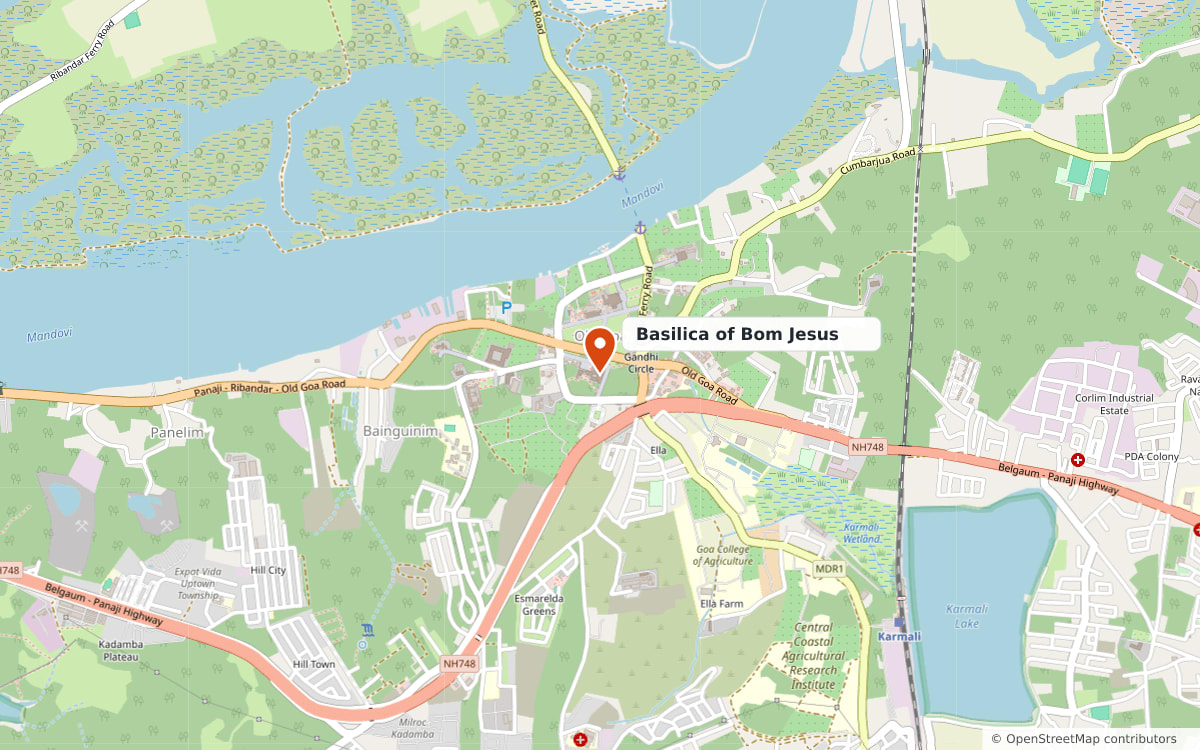
For the buildings, start at Old Goa. The Churches and Convents of Goa became a UNESCO World Heritage Site in 1986. The monuments include the Basilica of Bom Jesus, the Se Cathedral and the Church of St Francis of Assisi. The St Francis church keeps a Manueline doorway, and its inside is lavishly Baroque.
Our places guide says Basilica of Bom Jesus construction began in 1594 and finished in 1605, and that it holds the body of St Francis Xavier. Goans call him Goencho Saib, and his feast is on 3 December.
Temples tell the older story. Two to know are the Mahadev Temple and the Saptakoteshwar Temple, which show Kadamba and Maratha influence. Goan Hindus, the government page says, are very fond of natak, bhajan and kirtan.

Festivals through the year
Festival names are easy to find. Dates are harder, because Hindu festivals follow the lunar calendar and Christian ones follow the church year. So the table says “usually” and gives dates only where I found them.
Main Goan festivals, when they usually fall, and what happens
| Festival | Usually | What you will see |
|---|---|---|
| Carnival (Intruz) | February, before Lent | Parades led by King Momo, street bands, tiatr and mask dances |
| Shigmo | Around March | Floats, folk dances, dhol and taso drums, Holi colours |
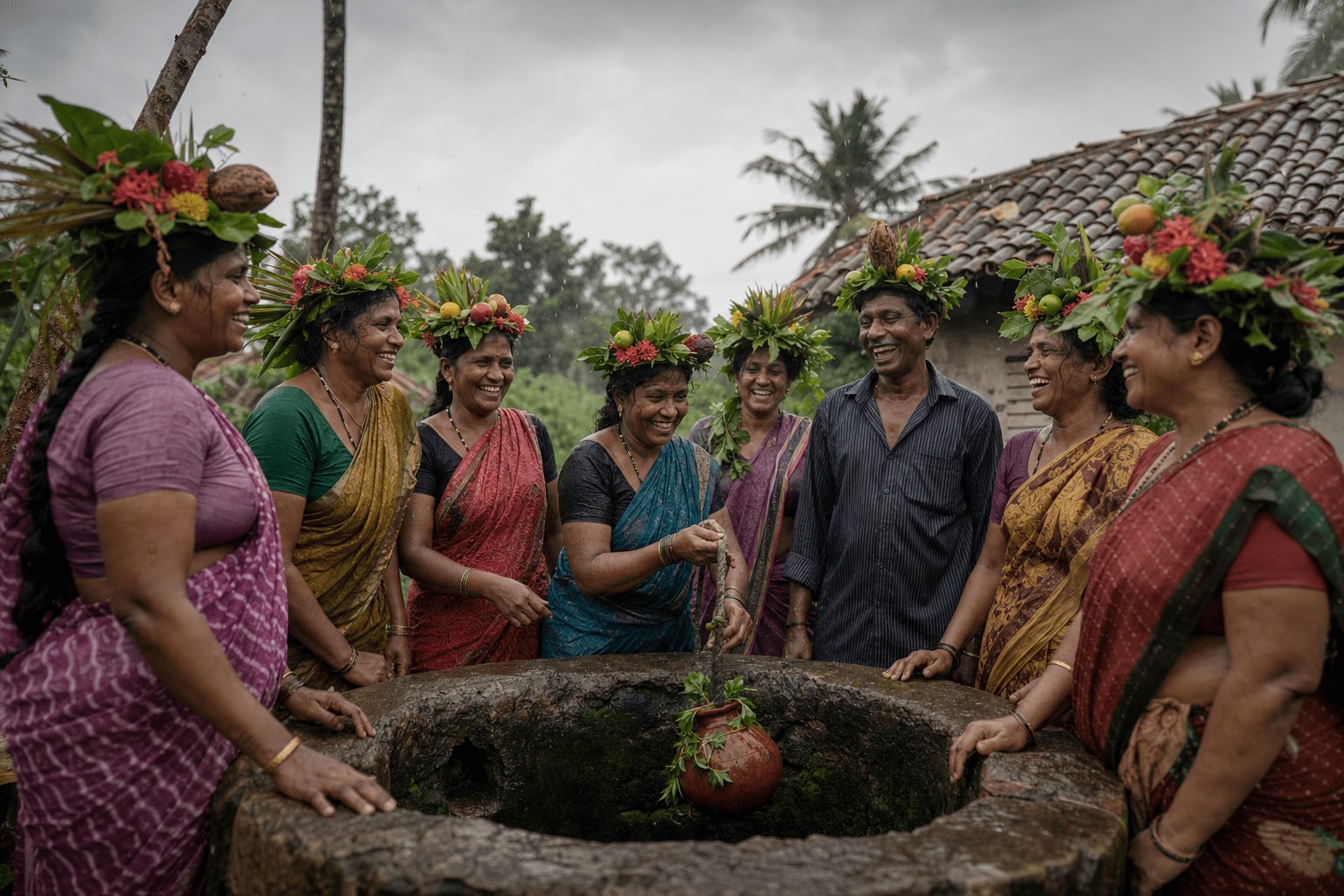
| São João | 24 June | Kopel flower crowns, jumps into wells and ponds, boat parades |
| Ganesh Chaturthi (Chavath) | Moves each year, check the date | One of the major festivals on the state’s list |
| Feast of St Francis Xavier | 3 December | Crowds at Old Goa |
| Christmas (Natalam) | December | Bebinca on the table |
Source: Free Press Journal
A few notes on the big three.
Carnival. Its roots lie in Roman Catholic traditions brought during the Portuguese period, and it has been celebrated since the 18th century. The parade you see now, Brazilian in style, was “imposed in 1965 to attract tourists” by one account. That’s a good thing to know before you decide how “traditional” a float is. King Momo takes over Goa for the days, and his message in Konkani is “Eat, drink and make merry.” One listing gives 2027 as afternoon 6 February to midday 9 February, and sources disagree by a day on 2026, so check the official tourism calendar before you book.
Shigmo. The Hindu spring festival is celebrated around March. It follows the Phalguna full moon, and rural celebrations can run over a fortnight, with different areas on different days. Dhol and taso drums go from house to house. I couldn’t confirm exact 2027 dates, so I’m not giving any.
São João. On 24 June, the feast of St John the Baptist, people jump into wells, ponds or rivers wearing kopel, crowns of flowers and fruit, says the Free Press Journal. It lands in the rains. The Siolim boat parade is the best known, with a prize for the best-decorated boat. It’s a monsoon-season festival, so if you want it, read our month-by-month guide first. Beach huts are closed then and the sea isn’t safe for swimming.
Easter (Paskanchem Fest) and Diwali are festivals too, and I’d treat them like Chavath: look up the year’s date before you fix your tickets.
What Goa eats
Rice with fish curry, called xit kodi, is the staple. The cooking uses coconut, coconut oil, chilli, spices and vinegar. The government page says pork dishes are cooked for major occasions among Goan Catholics.
Bebinca, a layered egg-based sweet, is a favourite at Christmas. That’s the one to look for in December.

Then there’s feni. Cashew feni is distilled from fermented cashew apple juice and coconut feni from fermented coconut toddy, both in traditional pot stills. Cashew feni got a geographical indication in 2009. The Goa government calls feni the most popular alcoholic drink in the state. If you want to try it, ask the person pouring where it was made.
I’ve said what I could verify. Our Goan food guide goes into what to order and why, and it’s the better place to plan meals.
Music, dance and theatre
This is where the layers show most clearly. The Culture of Goa page says Goan Catholics have performed Western classical music since the 1500s. The traditional Konkani forms include mando, dekhnni, dulpod and tiatr. Dances include dekhnni, fugdi, corridinho and mando.
Mando took shape in the 19th and 20th centuries among Goan Catholics. Love is the main subject, and the accompaniment is guitars, violins and the ghumot drum. Performers wear velvet or silk, sometimes embroidered with gold thread, and sway gently in time. It is a meeting point of local Goan and western musical traditions.
Tiatr is louder and funnier. It’s Konkani musical theatre, and its name comes from the Portuguese word “teatro”. The first tiatr was staged on Easter Sunday, 17 April 1892 in Bombay. The plays are in six or seven acts, with songs between them. Some of those songs, the kantaram, are often satirical about Goan politics. So if you go to one, you’ll laugh at a joke you won’t follow, and so will half the hall.
For Hindu communities, the government page lists natak, bhajan and kirtan, and also zagor, a performance of song, dance and stories from the Ramayana and Mahabharata with social themes.

Art, architecture and the way Goa looks
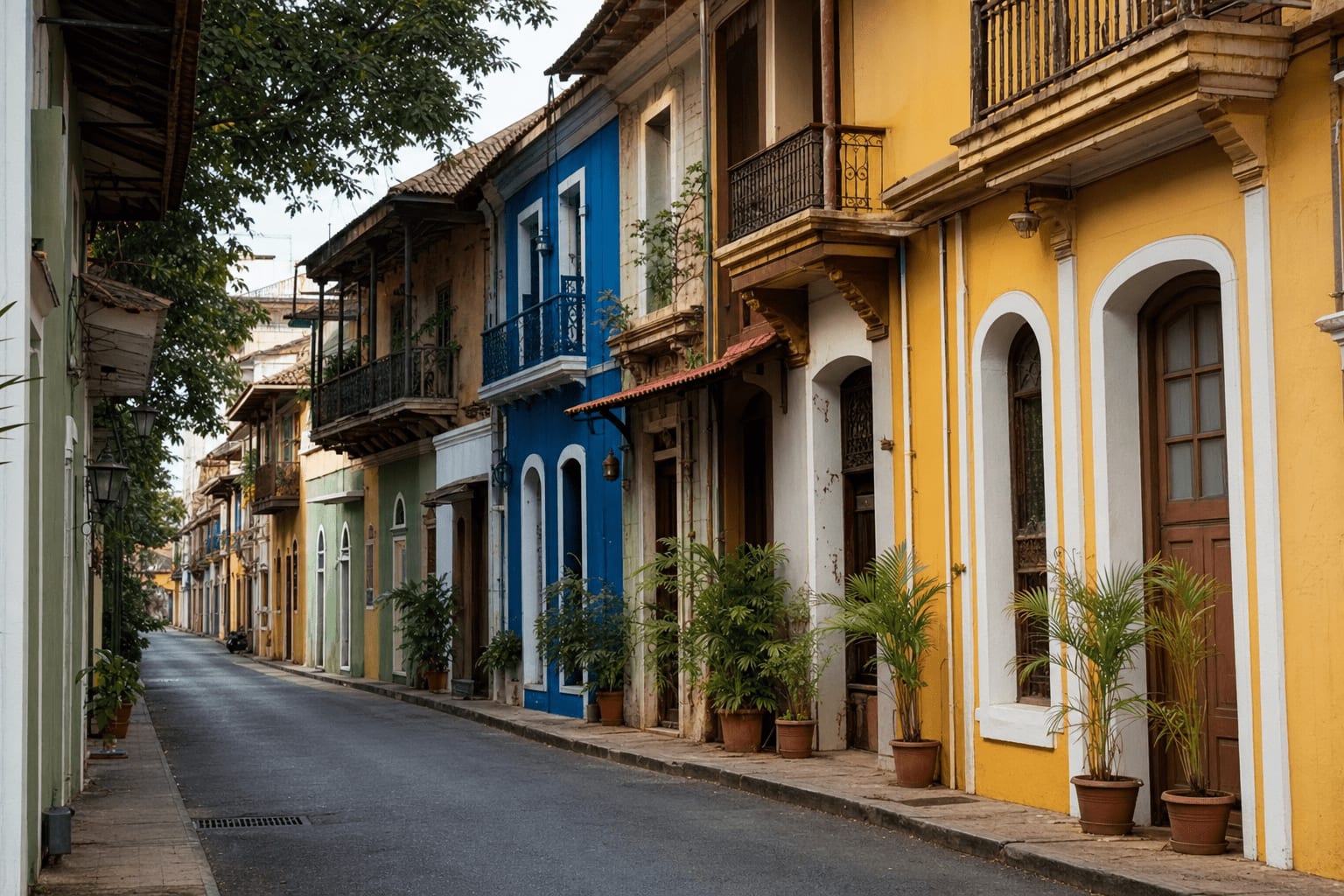
The architecture is the easiest culture to see without speaking to anyone. Old Goa has the churches above. Panaji’s Latin Quarter, Fontainhas, sits at the eastern end of town, and our places guide says to give yourself time to walk it. The Goa State Museum there holds Hindu and Jain sculptures and a printing press the Portuguese brought to Goa in 1556.
What I couldn’t verify were the details people often add here: azulejo tiles, terracotta work, the Kunbi saree and the exact origin of the dress styles. I’d rather leave a gap than hand you a confident line I can’t source.
How Goan culture has changed
Goa’s culture isn’t a museum piece. It has kept moving since 1961, and some of the change is easy to see once you know where to look.
Native Goans are now said to be outnumbered by non-Goans in the state. I have no count for that, so read it as a view and not a measured figure. The 1960s hippie community was marked by drug culture, trance music and free love, and Goa remains an international centre of youth culture. That’s a different Goa from the one in the church and temple sections above, and the two share the same coast.
Tourism has reshaped the festivals too. I mentioned the Carnival parade, brought in during 1965 to attract tourists. São João has gone the same way. The Free Press Journal says it has grown into a major tourist draw. Cultural activist Marius Fernandes blames alcohol and recklessness for a decline in the traditional celebration. The singer Lui Fernandes calls it too commercialised, but says he doesn’t mind as long as the traditions survive.
So Goans disagree about what has been lost, and that argument is part of the culture now.
Where to find the older culture
If you want the slower, older side, leave the beach strip. The places below come from local news and tour pages, which are partly promotional, so check that anything seasonal is running on your dates.
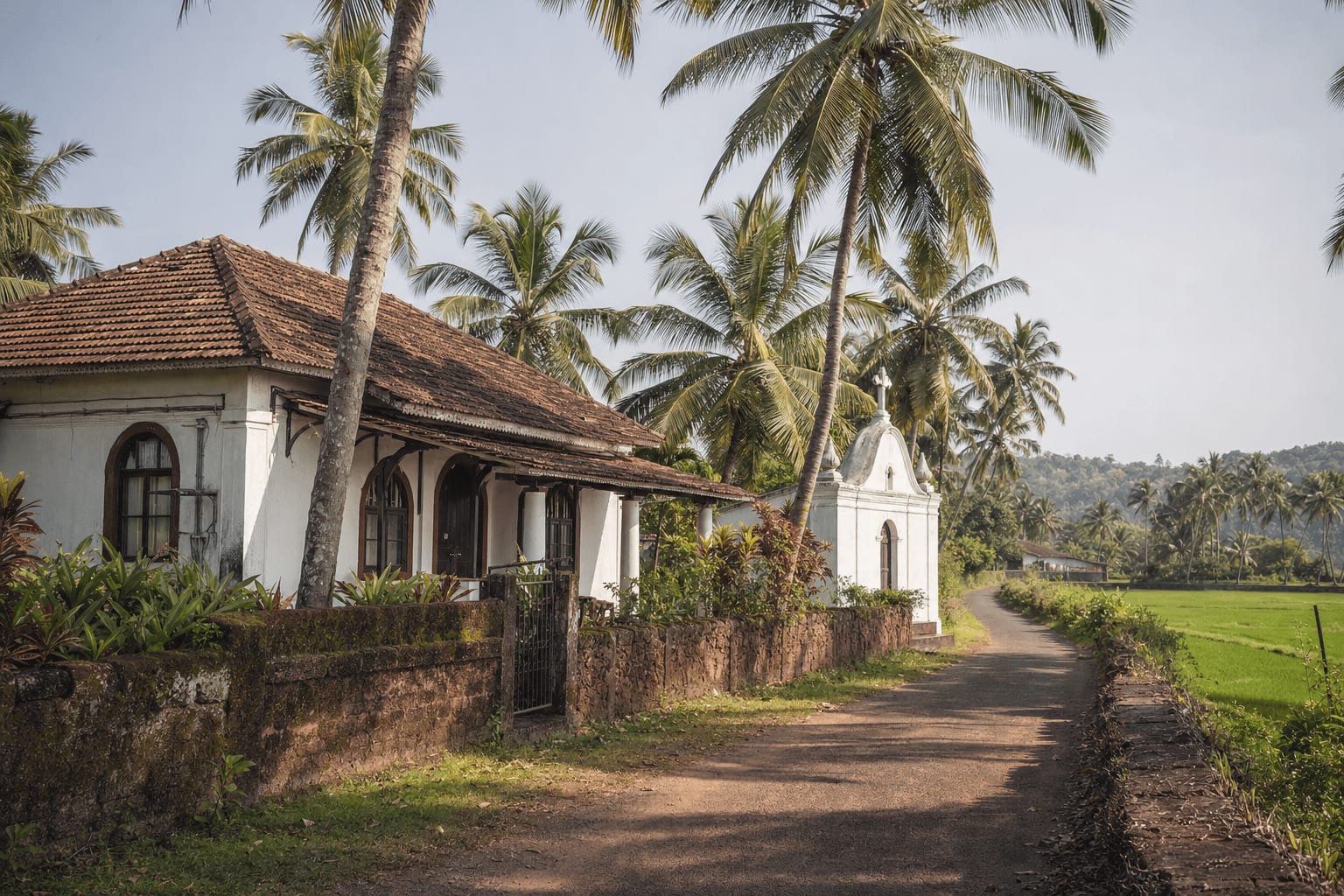
- Divar Island has Indo-Portuguese houses and Baroque churches, per Make It Happen’s village guide.
- Benaulim has the Goa Chitra museum, which displays artefacts and implements showing how Goans lived.
- Saligao has the Mae De Deus church, a rare Neo-Gothic example in Goa, and colonial-era architecture along narrow roads.
- Olaulim has the 350-year-old Church of St Anne, and backwater kayaking on the Mandovi.
- Mulgao is a folk village with over fifty temples and shrines. Gomantak Times describes a 2023 heritage walk there with a musical performance and a look at the coconut plantations. I can’t tell you it runs now, so ask first.
For living tradition, go at festival time. The Free Press Journal says alcohol-free São João celebrations in Pomburpa, Salvador do Mondo, Socorro and Saligao revived older customs such as shared food and traditional dance, and that the Ponsachem Fest grew out of them. Village customs like jumping into water and parading through the village continue in many places. In Shigmo season, the dhol and taso drums go from house to house. A tiatr in a village hall is another way in.
Visiting without being the loud one
This part is my advice, not a source’s.
Old Goa’s churches are active places of worship. Dress modestly, keep your voice down and check for service times before you plan photographs. That comes from our own places guide, and it applies equally at temples. At either, watch what others do with their shoes and phones, and follow.
Feast days are big for the people who hold them. If you’re near Old Goa around 3 December, expect crowds and a different mood. Go to look and listen, not to get the best photo.
At a village celebration, ask before you join in. At São João, a stranger jumping into a family’s well uninvited is a poor idea; at a Carnival parade, joining the street is the point. The difference is whether you were invited.
Alcohol is part of many celebrations, and also not part of some. The Free Press Journal reports alcohol-free São João celebrations that revive older food and dance traditions. Don’t assume.
And if you want to learn more than a guidebook says, go to a tiatr, or ask a shopkeeper which Konkani word they’d teach you first. That tends to start a better conversation than any list of sights.
A culture-first plan for a short trip
You can’t see the culture of Goa from one beach hotel. But you don’t need a week either. Here’s how I’d fit it into four days, as a shape and not a schedule.
Day one is a travel day. Don’t plan anything you’d hate to miss. On day two, do Old Goa in the morning, when it’s cooler: the Basilica of Bom Jesus, the Se Cathedral and the St Francis church. Spend the afternoon in Panaji’s Latin Quarter, and eat fish curry rice for lunch. Day three is a beach day, because you’ve earned one. Pick the beach by who’s with you, and our beaches guide helps there.
On day four, go back to Panaji for the museum with the printing press, and then, if your dates fall in a festival window, spend the evening at whatever is on. That might be a Carnival parade in February, a Shigmo procession around March, or the crowds at Old Goa on 3 December. A festival turns a sightseeing trip into the reason you went.
Time of year matters more than people expect. The dry months bring the crowds and the beach days. The monsoon brings São João and, usually, closed beach huts. Neither is the “real” Goa. They’re two halves of one calendar.
Then ask the person arranging your trip one blunt question: which of these things is actually open or running on my dates? A package that can’t answer it is a package for a beach holiday, which is fine, but then you know what you’ve bought.
Frequently asked questions
What is the culture of Goa known for?
A mix of Konkani, Hindu and Catholic traditions with a Portuguese layer. You see it in Old Goa’s churches, fish curry rice, mando and tiatr, and festivals such as Carnival, Shigmo and São João.
How did Portuguese rule shape Goan culture?
The Portuguese took Goa in 1510 and ruled for about 450 years, until 1961. They left the Old Goa churches, a Christian community that was 25.1% of the population at the 2011 census, a heavy Portuguese influence on Konkani, and mando and tiatr beside the older Hindu traditions.
What are the main festivals of Goa and when are they?
Carnival is in February, Shigmo around March, São João on 24 June and the feast of St Francis Xavier on 3 December. Chavath, Diwali and Easter move each year, so check the date for your year. Carnival 2027 is listed as 6 to 9 February.
What language do Goans speak?
Konkani, which is the official language, passed by the Goa Legislative Assembly on 4 February 1987. Most Goans speak it as a first language, in Devanagari or Roman script, and practically all understand it.
What religions are practised in Goa?
At the 2011 census, 66.1% of Goans were Hindu, 25.1% Christian, 8.3% Muslim and 0.1% Sikh.
What are the traditional dances and music of Goa?
Mando, dekhnni, dulpod and tiatr are the Konkani forms. The dances are dekhnni, fugdi, corridinho and mando. Hindu communities also have natak, bhajan and kirtan.