Thailand in one page
In short: Thailand is an easy first trip from Delhi if you sort entry, season and money early. Indian tourists were due a 30-day visa exemption from 15 September 2026. November to February is the cool season.
You type “Thailand” into a search box and get a country’s history, a long list of beach names and visa stories that don’t agree. None of that tells you what to do on Tuesday. That’s what the results are bad at, and it isn’t a reading problem on your side. If you want the hotel, transfers and sightseeing sorted in one place, VeeTrips lists a Delhi-departure Thailand package with the inclusions spelled out. Read this first, though. It’s the checklist I’d hand a cousin before they paid anyone, including us.
I’ve kept the places themselves to our region-by-region page and the Krabi guide, so this page doesn’t repeat them. This one is about the country: who you’ll deal with at the airport, what the weather does, how money behaves, and where first-timers get caught. Everything with a date has its source next to it. Where I couldn’t find a trustworthy number, I say so and leave it out.
The country in a few lines
A few facts help you picture the place. Wikipedia gives the capital as Bangkok, which is also the largest city, and a population of 65,975,198 (a 2024 estimate). The time zone is UTC+7, so Bangkok runs 1.5 hours ahead of Delhi. Buddhism is the religion of 93.46% of people, per the 2018 census figure on that page. And it says Siam was the only country in Southeast Asia to avoid colonisation by European powers.
That last fact shows up in daily life more than you’d think. The monarchy, the temples and the national pride are not decoration. They’re why the etiquette section below matters.
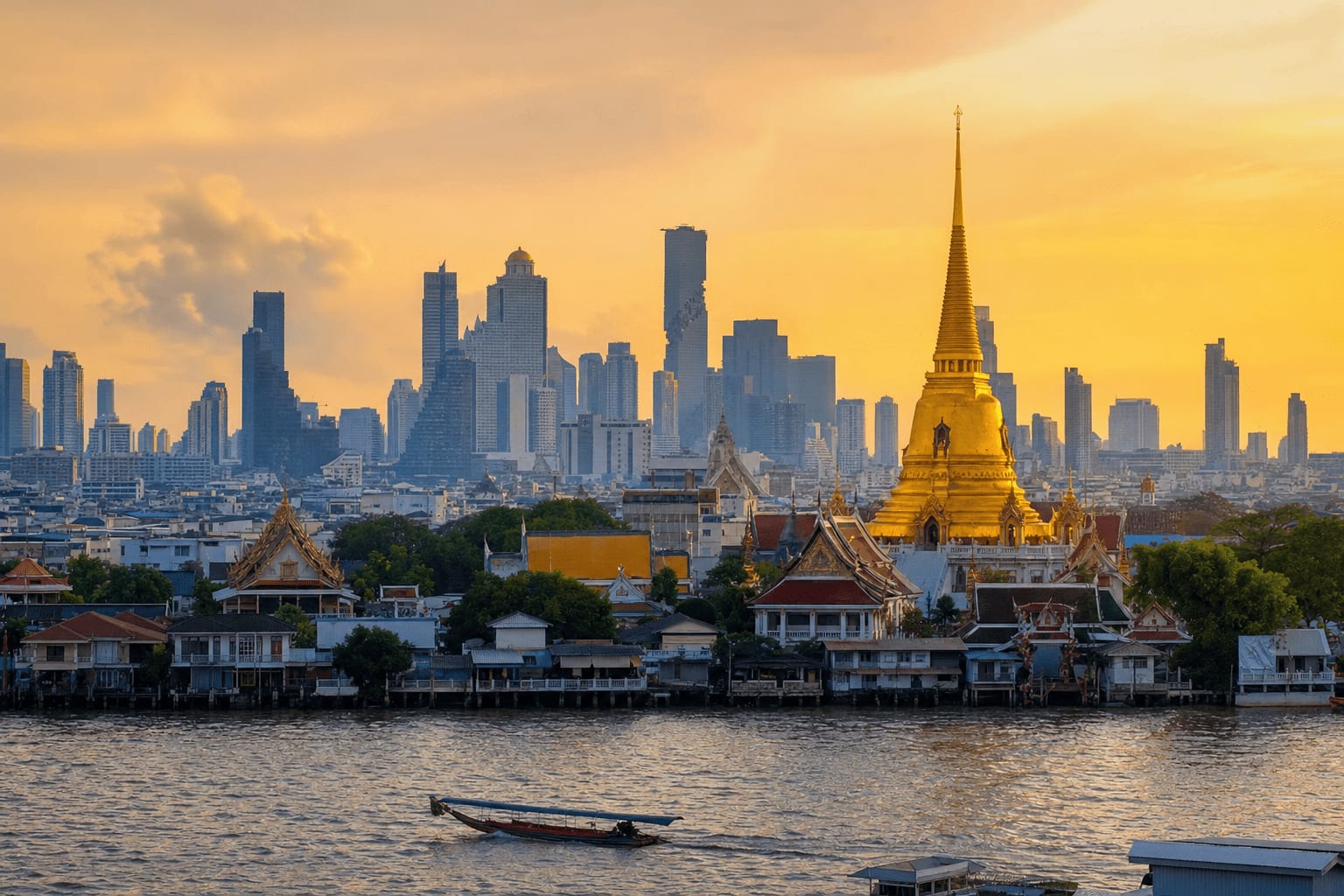
Thailand at a glance, for a Delhi traveller
| Thing | What the sources say | Why it matters to you |
|---|---|---|
| Capital | Bangkok | Most flights from Delhi land here |
| Time | UTC+7, 1.5 hours ahead of Delhi | Small jet lag, easy phone calls home |
| Currency | Baht (THB) | Cash and card rules are below |
| Main religion | Buddhism, 93.46% (2018 census) | Temple dress and manners |
| Emergency | Police 191, fire 199, medical +66-1669 | Save them before you fly |
Source: Wikipedia, Thailand; Wikivoyage, Thailand
Wikivoyage also gives 1155 for the Tourist Police, which it mentions in the rental car section. I’d save that too.
Entry rules for Indian passports, and the dates
This is the part that changed this year, and the part where old blog posts will mislead you. So here are the dates, in order.
On 27 July 2026 the Royal Thai Embassy in New Delhi updated a notice saying the Cabinet had approved, on 14 July 2026, a 30-day visa exemption scheme for Indian passport holders entering Thailand for tourism. It said the scheme would take effect 15 days after the announcement in the Royal Gazette. For stays longer than 30 days, it said you’d need an e-visa, applied for at www.thaievisa.go.th.
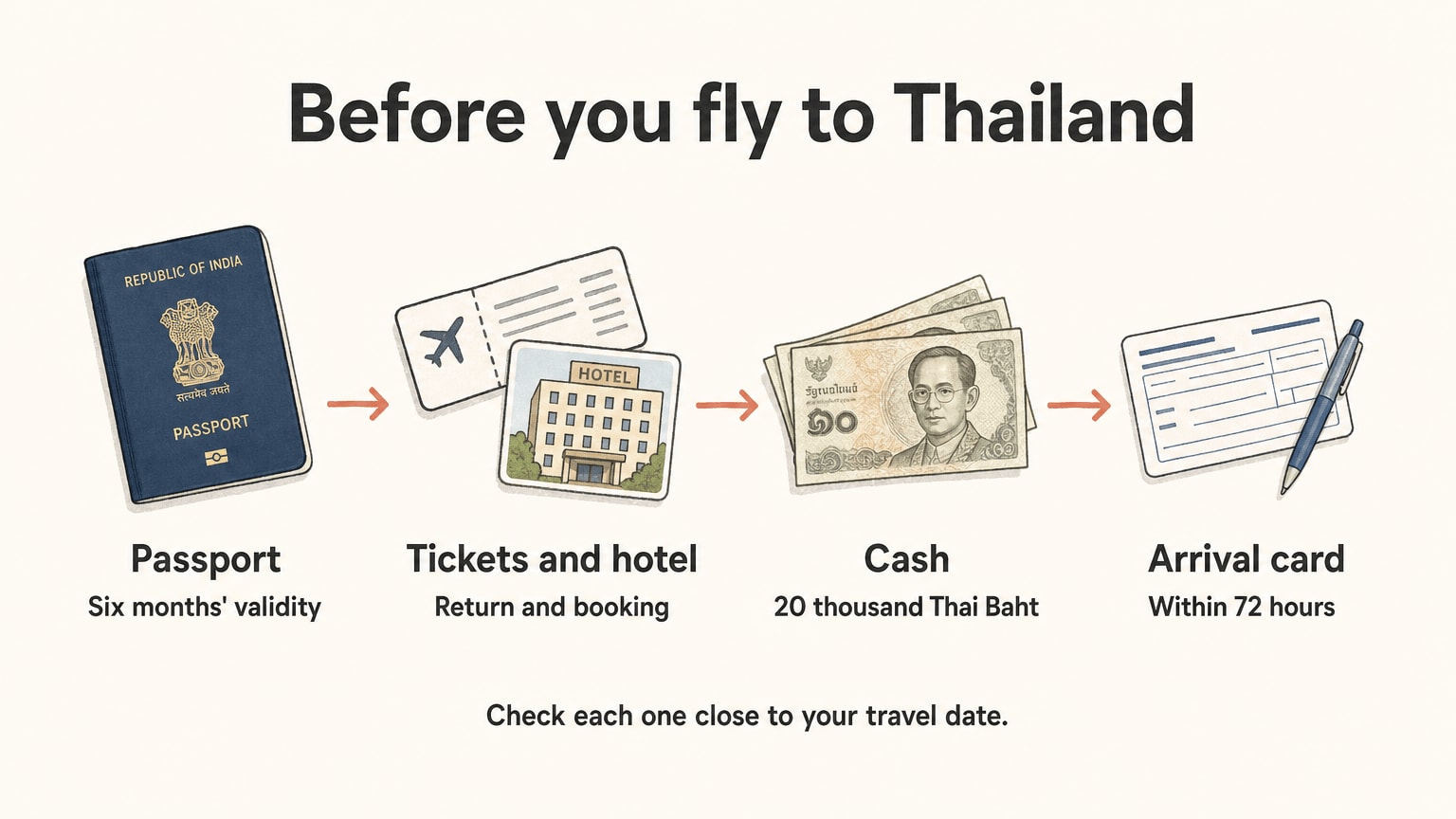
The Tourism Authority of Thailand later wrote that the new framework takes effect on 15 September 2026, that the older 60-day exemption ends the same day, and that India is number 23 on a list of 60 countries and territories with up to 30 days. All India Radio reported on 9 September 2026 what to carry:
- a passport with at least six months’ validity from the date of arrival
- confirmed return tickets, hotel bookings and clear travel plans
- at least 20 thousand Thai Baht in cash per passenger
- the Thailand Digital Arrival Card, completed within 72 hours before arrival
The card is not new for this rule. Wikivoyage says foreigners have had to fill it in online within 72 hours of arriving since 1 May 2025. Do it the day before you fly, on your phone, at home. Not at the immigration queue.
Two limits, and I’d rather say them. First, the cash line comes from a news report, not from an official page I could read, so ask your airline or the embassy whether it will really be checked. Second, I found no official Thai notice dated after 15 September 2026, so I can’t tell you nothing has moved since. Rules like this have changed several times. Check the embassy page the week you fly. VeeTrips offers visa assistance, but the government decides, not us, and I won’t promise you an outcome or a timeline.
One more TAT detail, for anyone who plans to cross a land border later in the trip: it says the twice-per-calendar-year limit on land entries applies, and India is not among the nationalities exempted from it.
Getting there from Delhi
Most first trips start in Bangkok, the capital, and I’d plan around that. What I can’t give you is a trustworthy flight time. When I searched, the travel sites quoted anything from a little under four hours to nearly five for a nonstop, and they were copying each other. So I won’t invent a number. Ask the airline for the schedule on your date.
Here’s what I’d ask before paying for any ticket, ours or someone else’s:
- Is it nonstop, or does “direct” mean one plane with a stop?
- Which airport does it land at, and how far is your hotel from it?
- What time does it land? A late arrival turns day one into a transfer.
- What’s the checked baggage allowance? Thai markets are a real temptation.
- What happens to the hotel if the flight moves?
Once you’re in, Wikivoyage says you can reach nearly anywhere from Bangkok by a domestic flight of about an hour. Plan your regions so half your holiday isn’t spent in transit. Our places page explains which pockets pair well.
When to go
Thailand is hot all year. Wikivoyage says temperatures sit in the 28-35°C range. What changes is the rain, and how much of the day you can spend outside.
Thailand’s three seasons, as Wikivoyage describes them
| Season | Months | What to expect |
|---|---|---|
| Cool | November to February | It doesn’t rain much and temperatures are at their lowest |
| Hot | March to April | Up to 40°C, with April usually the hottest |
| Rainy | May to October | Rains really get going in September, when monsoons hit most of the country |
Source: Wikivoyage, Thailand
So November to February is the easy answer, especially for parents or children. It’s also when many Indian families travel, so ask for the exact rate on your dates. I don’t have a dated source for hotel prices by month, so I won’t quote a number.
There’s one exception worth knowing. Wikivoyage says the Central Gulf Coast, which includes Ko Samui, has its rainy season reversed, with the rains from November to February. A November trip to Phuket and a November trip to Samui are different bets. The places page goes into the coasts month by month.
I can’t promise a dry week in any month. Nobody can. A rainy-season trip can still have bright mornings, and in the cool season a shower can still ruin an afternoon. Pack a light rain jacket either way.
The sun is its own issue. Wikivoyage says it’s harsher than at higher latitudes, and that a couple of hours with unprotected skin will leave you red and in pain even on a cloudy day. Sunscreen first, then everything else.

Money: baht, cards and the ATM fee
The currency is the baht. A few rules that save arguments at the counter.
ATMs. Wikivoyage says there is a 250 baht surcharge, as of March 2026, for using foreign cards in most ATMs. So take out fewer, larger amounts than you would in Delhi. Check what your own bank charges on top.
Card payments. When a machine offers to bill you in your home currency, Wikivoyage’s advice is to always choose to be charged in Thai baht. It lists unfavourable dynamic currency conversion at some ATMs among the common scams. The short version: say no to the rupee option, say yes to baht.
Bargaining. Haggling is the norm at markets and roadside stalls. Government-run fixed-price shops and hotel gift shops are useful for knowing what a fair price looks like before you start.
Tipping. Wikivoyage says tipping is not common, never give more than 50 baht, and don’t tip where a service charge has already been added.
Counterfeits. It warns about fake 1,000 baht notes. Take large notes from a bank or an ATM, not from a stranger at a stall.
What I couldn’t find is a dated, sourced per-day budget for meals, rooms or tours in baht or rupees. The pages I read were either old or sold something. I won’t invent one. If a seller tells you a number, ask what it covers and what year it’s from.
Getting around
Bangkok is where most people feel overwhelmed, so a few plain facts.
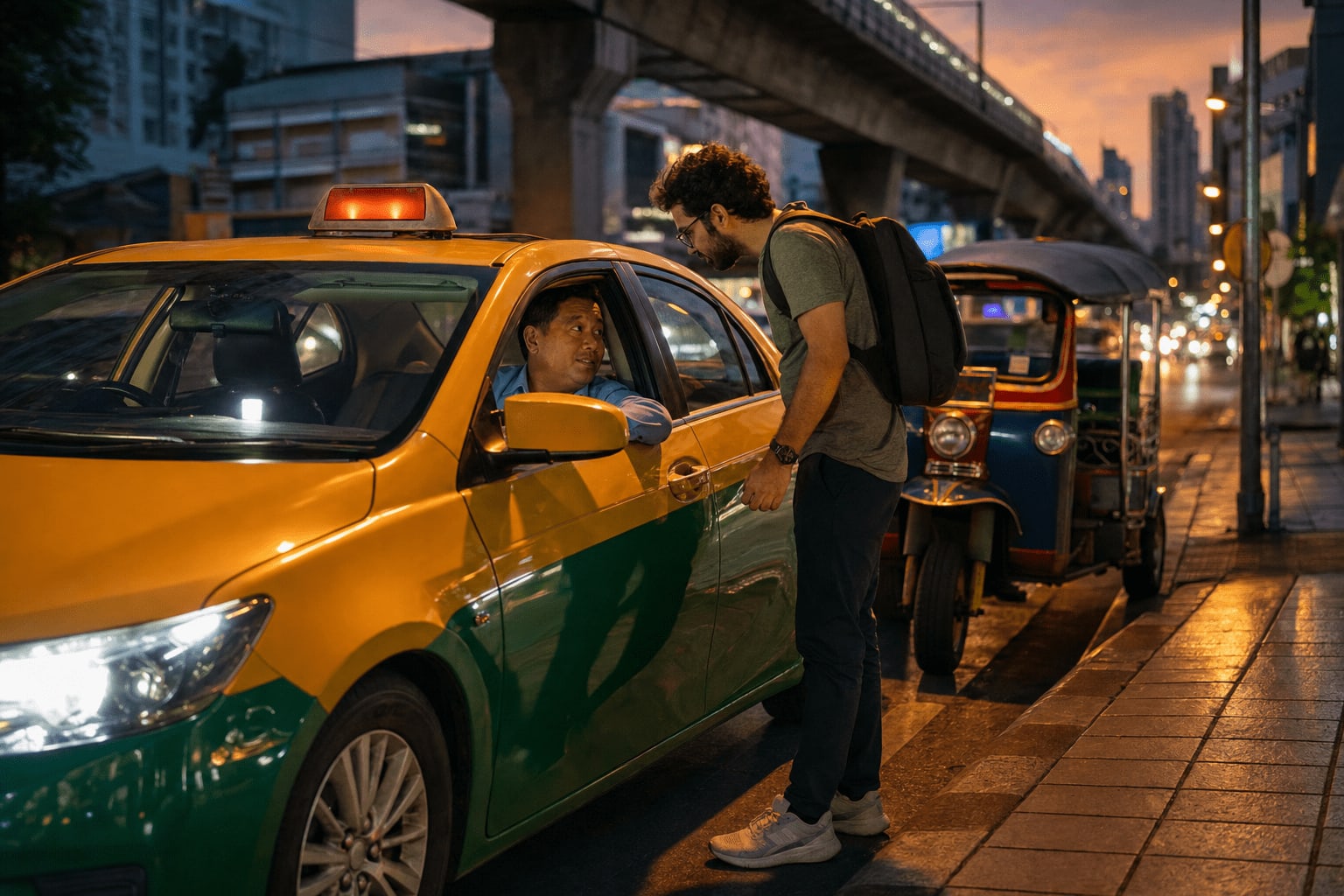
Taxis. Wikivoyage says to always insist on the meter. If a driver refuses, use another taxi. Taxis that sit idle outside tourist areas are the ones to be careful with.
Tuk-tuks. Expect a “farang price”, meaning a tourist price, not the Thai one. Drivers sometimes claim they have no change for a big note, so break it in a nearby shop first.
Ride apps. Grab fares are typically up to 2x taxi fares, says the same page, but the price is fixed. Wikivoyage’s tip is to try a nearby pickup point. Its example is a fare falling from 400 baht to 40 baht just by walking a little way. That is an example of the idea, not a rate card.
Between cities. Domestic flights are quick. The same page says plush VIP buses serve every city of any size, and the State Railway runs a 4,000-km network. Trains are described as safer than buses but often slower and prone to delays.
Scooters. Wikivoyage says motorbike rentals can start from about 1000 baht a week including a helmet. It also says Thailand’s traffic safety record has a lot of room for improvement. I’d skip the scooter on a first trip. It’s the one cheap thing I’d talk you out of. Rental deposit disputes and staged “stolen” vehicles are both on its scam list, and if you’ve never ridden on the left in a crowd of other riders, a holiday is a bad time to learn.
Food and water
This section is short on purpose. I’d rather give you less than guess.
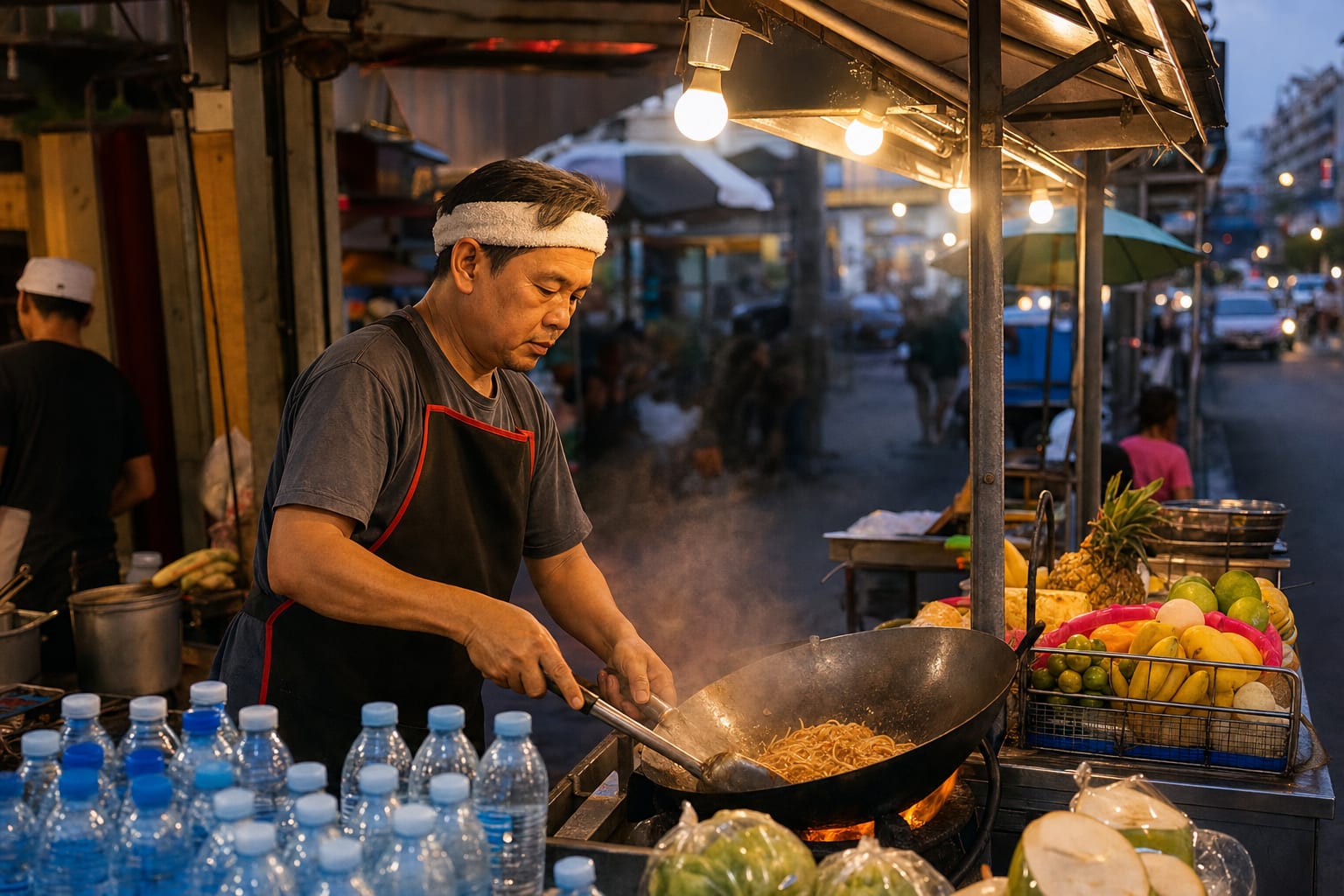
Tap water is usually not drinkable outside Bangkok, according to Wikivoyage, though many Bangkok buildings, especially new ones, are considered safe. Bottled water is about 5 to 20 baht. Drinking water served in restaurants is always at least boiled, it says, and factory-packaged ice is considered safe. The worry is hand-cut ice.
Many Chinese-origin dishes, noodles and steamed buns among them, are now part of Thai cuisine, says the same page. Beyond that, I won’t tell you what a bowl of anything costs, because I couldn’t find a dated source.
A gap you may care about: many Delhi families travel vegetarian, and I did not find a source I trust on how easy that is across the country. Ask your hotel or seller before you go, and ask which meals are in the price. We’ve logged it as a topic to write properly, with a source.
Customs and temple etiquette
This is where a good trip can go sideways in a minute, and almost always by accident. I’d read this section twice.
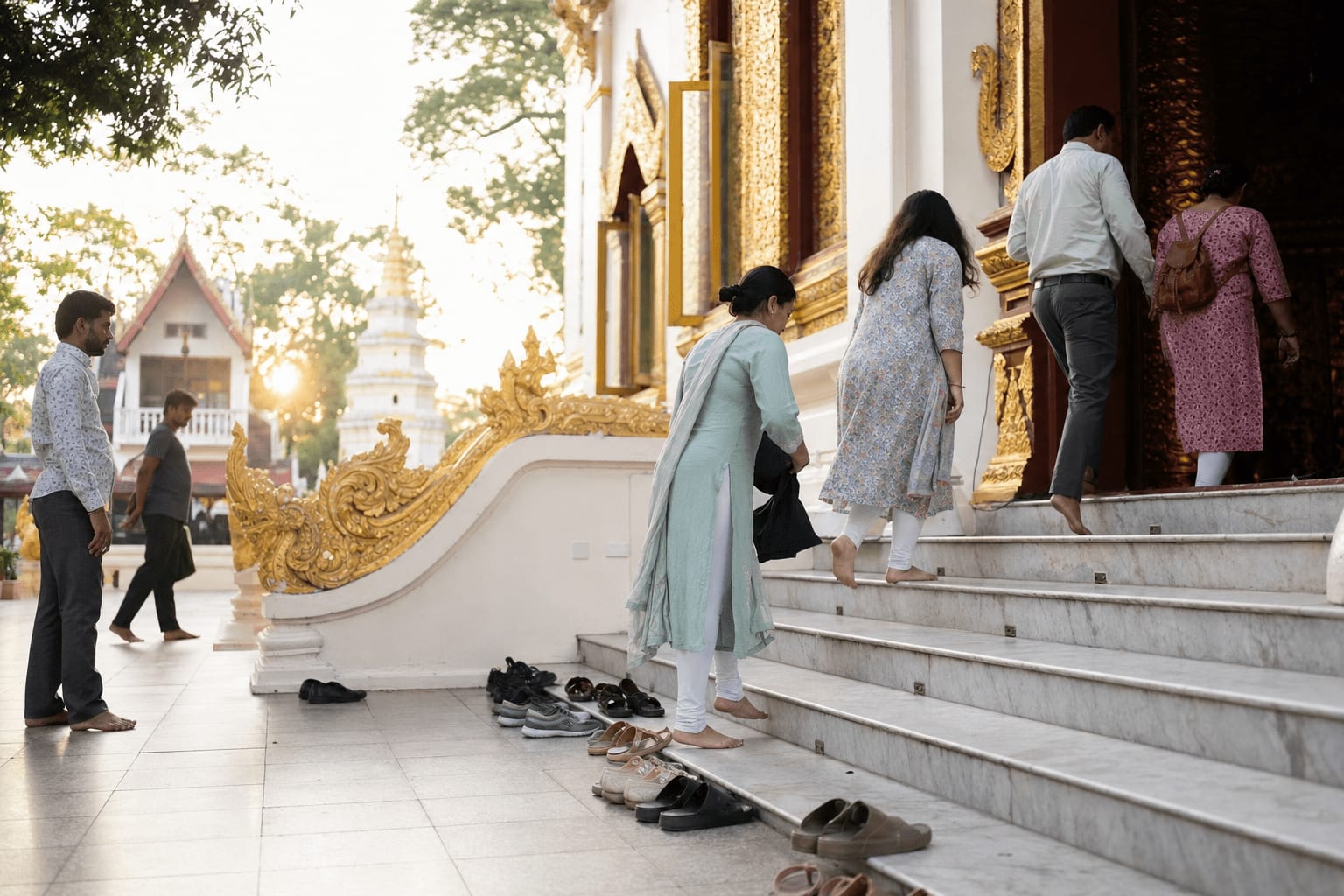
Temples. Wikivoyage says dress should be unambiguously modest and cover your entire torso and most of your limbs. Men need ankle-length pants, and a t-shirt on top is fine. Women should cover at least their shoulders and knees. Shorts and sleeveless shirts are “highly inappropriate at sacred sites”. Take your shoes off before you go in.
Heads and feet. The head is the most exalted part of the body, and feet are the lowliest. Never touch or pat a Thai on the head, children included. Don’t point at people with your feet, and don’t step over someone’s outstretched legs.
The wai. That’s the palms-together greeting. Foreigners aren’t expected to do it perfectly. Wikivoyage says a slight bow is more than enough for ordinary occasions, and that you shouldn’t wai service people or street vendors.
Buddha images. Don’t wear Buddha imagery on a t-shirt, and don’t pose alongside a statue or climb on one. Exporting a Buddha statue without a licence from the Fine Arts Department is illegal.
The monarchy. This is the one that isn’t a matter of manners. Wikivoyage says insulting the monarchy is punishable by up to 15 years in prison, with a minimum of 3. It also says never mishandle Thai coins and banknotes, because they carry the King’s portrait. That includes stepping on a note that’s rolling away in the wind. Pick it up, don’t stamp on it.
Monks. On long-distance buses, you may have to change seats if a monk boards and your ticket gave you a front seat.
Rules you can’t talk your way out of
Wikivoyage says vapes and e-cigarettes are strictly illegal in Thailand. Leave yours at home. It also says the country keeps an extremely hard line on drugs, with penalties for smuggling that it calls extremely harsh. Cannabis is medically legal with a licence card, but public consumption is not permitted. Don’t carry anything for a friend, and don’t accept a bag from a stranger at the airport.
Duty-free, the same page gives 1 litre of alcohol and 200 cigarettes. Check the current allowance on the Thai customs site before you fly, because I only read it on a guide page.
Elephants, and the photo you shouldn’t take
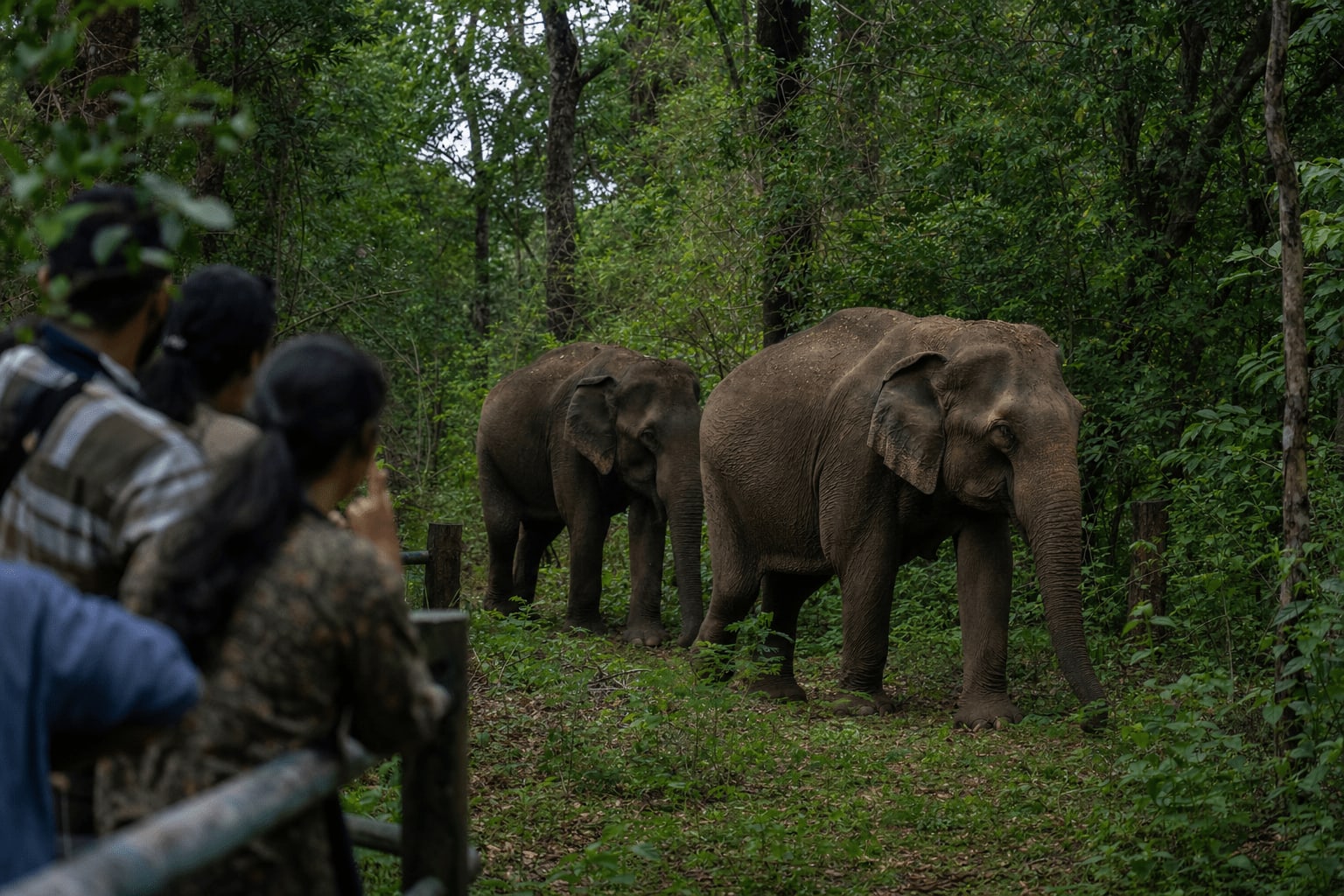
Elephant rides are on every Thai itinerary. Wikivoyage says the animals are usually forced to work long hours, and it describes abuse and sometimes being denied food and water. It names Elephant Nature Park near Chiang Mai as an example of an operator that doesn’t do this. I haven’t visited, so treat that as one pointer, not a clearance.
On beaches, it also warns about touts using drugged lizards and birds as photo props. Say no. And don’t buy ivory or other products that are likely to have come from poaching.
My opinion: pick a place where you watch, not ride, and ask the seller in writing what the animals do all day. If they can’t tell you, that’s your answer.
Safety and the scams that catch first-timers
Thailand is easy, and visitors still lose money, almost always to the same few tricks. Wikivoyage opens the topic bluntly: some people have made scamming tourists into an art form. The ones it lists:
- hotel-pickup minivans that make several stops before they reach the station
- rental deposit disputes and staged thefts of the vehicle you rented
- counterfeit 1,000 baht notes
- unfavourable currency conversion at some ATMs
- overseas job offers, which it calls rampant
And the usual taxi and tuk-tuk points from above. The pattern is the same each time. Someone hurries you, so slow down. Ask the price before you move. Take photos of any rental before you ride off.
Two health notes. Dengue can turn up anywhere, even in the most modern cities, and Wikivoyage says the only prevention is avoiding mosquito bites. Wear long clothes at dusk and use repellent. And tap water, as above.
For real trouble, the numbers are police 191, fire 199, emergency medical +66-1669 and the Tourist Police on 1155. Put them in your phone before you take off.
Phone and data
The country code is +66. Wikivoyage says prepaid SIMs are sold in convenience stores for as little as 50 baht, and that you must give your passport details. It mentions 7-Eleven SIMs with 30GB of data valid for 30 days at 199 baht, as of November 2025. Airport counters mainly sell pricier tourist SIMs. Coverage is described as very good throughout the country, with AIS said to be best in the countryside. Wi-Fi is common in hotels and cafés.
One thing to know before you try to message the driver. Most Thais use LINE, and the page says WhatsApp is not popular. So ask your seller for a phone number that makes calls, not only a chat handle, and get the driver’s name before you land.
What a Thailand package should spell out
You can do all of the above yourself. Some people would still rather have one person answerable for hotel, transfers and sightseeing, and that’s a fair reason to buy a package. The trouble is that listings look alike and aren’t.
Here’s what our own page showed when I read it on 13 November 2026. It lists four Thailand packages per person, all with 3-star or 4-star hotels and daily breakfast. Look at what flights do to the number.
Four VeeTrips Thailand listings, per person, as read on 13 November 2026
| Package | Nights | Listed price from, per person | Flights |
|---|---|---|---|
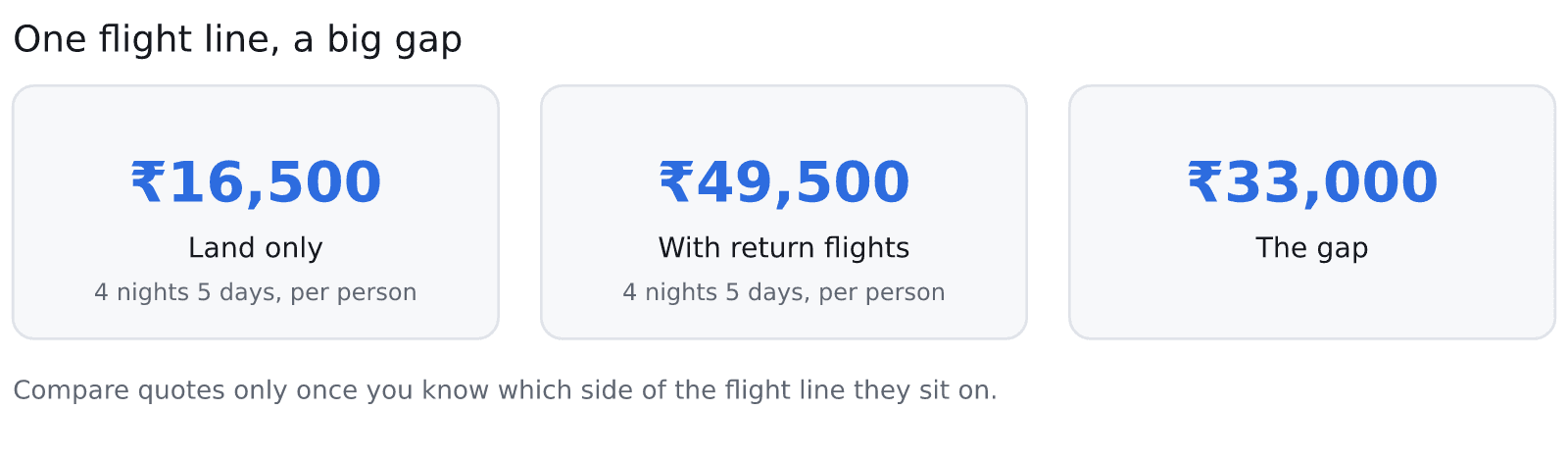
| Bangkok and Pattaya, land only | 4 nights 5 days | ₹16,500 | Excluded |
| Bangkok and Pattaya, with flights | 4 nights 5 days | ₹49,500 | Return, ex Delhi, included |
| Phuket and Krabi, land only | 5 nights 6 days | ₹29,500 | Excluded |
| Phuket and Krabi, with flights | 5 nights 6 days | ₹58,500 | Return, ex Delhi, included |
Source: VeeTrips, Thailand packages from Delhi, read 2026-11-13. Prices change; ask for your dates.
The Bangkok and Pattaya pair is the plainest lesson. The only line that moves is the flight, and the listed prices are ₹33,000 apart. So one headline price can’t be compared with another until you know which side of that line it sits on.
Two things I’d flag, because I’d rather say them than have you find them. Our home page shows Bangkok Pattaya, 4 nights 5 days with flight, from ₹49,999 per person, while the package page shows ₹49,500. Ask which is current for your dates. And the package page splits the nights two ways in different places, 3 in Pattaya and 1 in Bangkok in one spot, 2 and 2 in another. Confirm the split in writing. The page also has a visa column that says “Free” or “Free on arrival”, without saying what that means. I wouldn’t read that as the visa being arranged for you. Ask what it covers, and who pays any fee.
What to ask any seller, line by line
| Line | Ask this | Why it matters |
|---|---|---|
| Flights from Delhi | In the price or not? Which airline? | The biggest swing in the total |
| Visa and entry | What’s covered, and who does the Digital Arrival Card? | Rules changed in 2026 |
| Hotel area | Which part of Bangkok or the coast? | Decides your travel time each day |
| Transfers | Private car or shared? Airport only? | Shared transfers usually take longer |
| Boat days | What if the sea is rough? | You want a refund or another day |
| Meals | Breakfast only, or more? | Dinners add up |
| Contact | A person with a phone that gets answered | Plans change |
If you’d like to compare against a list of inclusions, the VeeTrips Thailand page is the one I’d look at. Whatever you pick, get the answers in writing.
How many days, and where to start
For a first trip I’d say five nights is the least. Our places page suggests two in Bangkok and three on one coast, and I agree. The flight takes a day at each end. Add days before you add places.
A rough way to choose, from what I’ve read
| If you have | I’d do | Skip for now |
|---|---|---|
| 5 nights | Bangkok plus one beach region | Chiang Mai, a second coast |
| 10 nights | Bangkok, one coast, and a slow day | Packing in every island |
| Parents travelling | Cool-season months, one base on the coast | Boats with luggage, steep viewpoints |
On islands, if you’re weighing Krabi, the Krabi guide explains why it isn’t one island and where to base. I’m leaving the Phuket-or-Pattaya debate for a page of its own.
Frequently asked questions
Do Indians need a visa for Thailand?
Reports and notices say Indian tourists get a 30-day visa exemption from 15 September 2026, per the Tourism Authority of Thailand and the Royal Thai Embassy in New Delhi. Longer stays need an e-visa. Rules have changed before, so check the embassy site the week you fly.
What is the best time to visit Thailand?
Usually November to February, the cool season, when Wikivoyage says it doesn’t rain much. March and April are the hottest, up to 40°C, and May to October is rainy. Ko Samui is the exception, with rain from November to February. I can’t promise weather for any particular week.
What is the Thailand Digital Arrival Card?
An online form every foreign visitor fills in before landing. Wikivoyage and All India Radio both say within 72 hours of arrival. Do it at home the day before you fly.
How much cash do I need to carry?
All India Radio reported on 9 September 2026 that travellers should carry at least 20 thousand Thai Baht in cash per passenger. That is a news report, so confirm with the embassy or your airline. Also note the 250 baht fee Wikivoyage lists for foreign cards at most ATMs.
Is Thailand safe for first-time visitors?
It’s easy and most trips go fine, but scams are common. Use metered taxis, ask a price before you move, avoid scooters if you’re not an experienced rider, and wear long clothes at dusk against dengue. Police are 191 and the Tourist Police 1155.
What should I wear to temples?
Cover your shoulders and knees, at least. Wikivoyage says men need ankle-length pants and that shorts and sleeveless shirts are highly inappropriate at sacred sites. Take your shoes off before going inside.
Is tap water safe to drink in Thailand?
Usually not outside Bangkok, says Wikivoyage. Drink bottled water, which is about 5 to 20 baht. Factory-packaged ice is considered safe; hand-cut ice is the worry.
Can I vape in Thailand?
No. Wikivoyage says vapes and e-cigarettes are strictly illegal. Leave them at home.